Daylight, brain serotonin, and the gut's separate pool

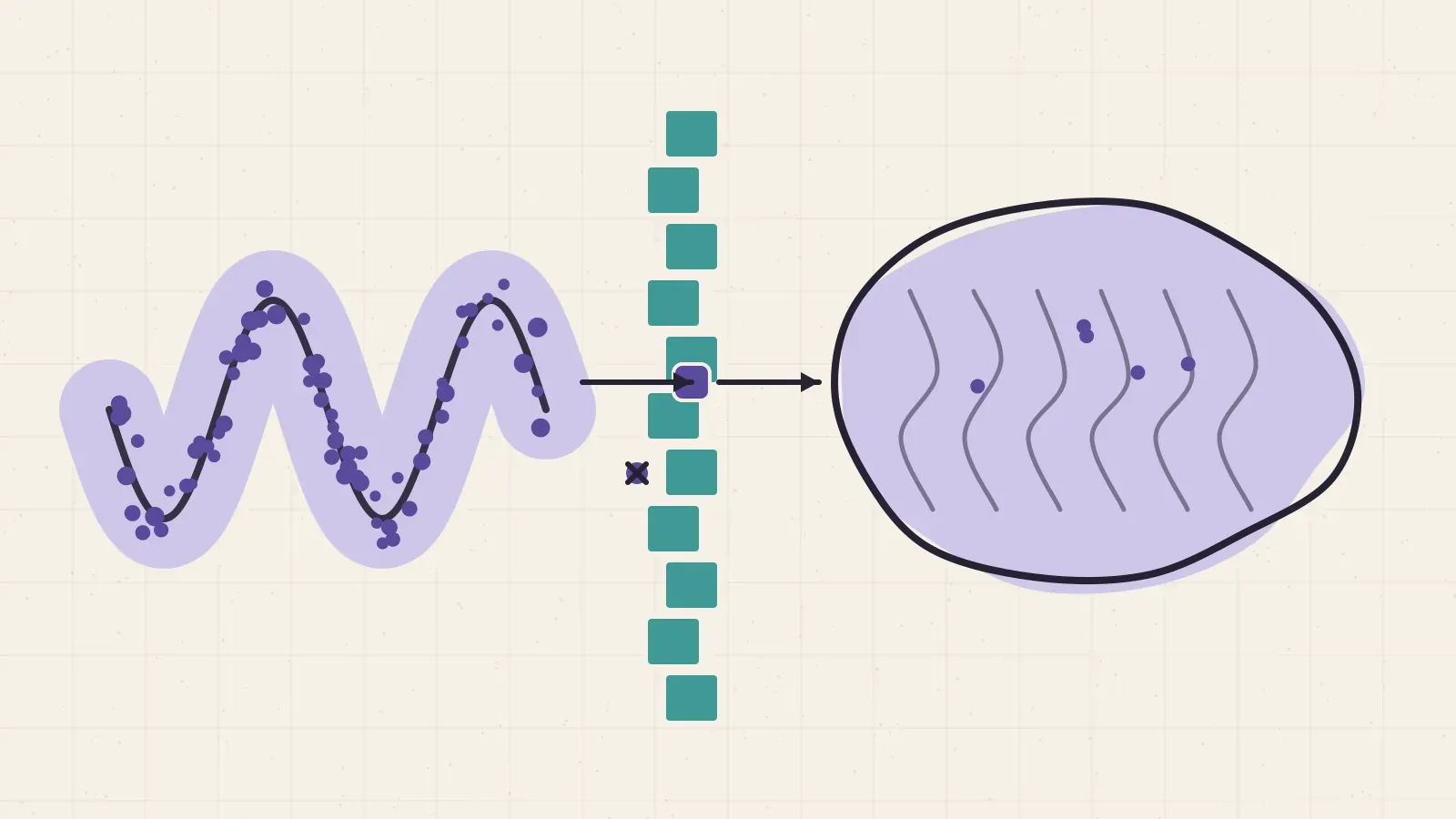
One name, two pools
Serotonin is a small molecule with a crowded reputation. People talk as if the body kept one shared tank. A sunny morning, in that story, tops the tank up. The chemistry is split.
Most of the serotonin in the body is made in the gut. That pool does not freely cross the blood-brain barrier. It does not become the serotonin that colors mood, patience, and a waking hour. Brain serotonin is made in the brain, from tryptophan that did cross. Daylight reaches that brain pool through the eye. Photons hit the retina. Nerve signals carry the news inward. The gut does not ship serotonin upstairs.
The gut’s kitchen
Enterochromaffin cells in the intestinal lining make the large peripheral pool. They run tryptophan through tryptophan hydroxylase 1, the form of the enzyme used outside the brain. The product is released into the gut wall and into nearby blood.
In the gut the job is local. Serotonin paces the muscle that moves a meal and signals nerves in the wall. It helps the gut sense stretch and the chemistry of food. None of that is a mood.
In blood, platelets store most of that serotonin and release it when a vessel is cut. They do not make it. The release helps tighten the vessel and shape the clot. That is repair work, not a thought. Mood is not one of the gut pool’s jobs, because the molecule does not make the trip.
A wall with a job
The blood-brain barrier is a lining, not a slogan. Brain capillaries are built from endothelial cells locked by tight junctions. Those seals stop many blood-borne molecules from leaking into brain tissue. Pumps throw some intruders back into the blood.
Serotonin is a poor candidate for a casual crossing. At body pH it carries charge. It has no inbound shuttle that would empty the platelet store into the gaps between neurons. A busy gut is not a mood factory for the skull. A cramp is not a thought. A bleak hour is not a failed intestine.
A nerve message is not a shipment
Serotonin in the gut wall can stimulate sensory branches of the vagus nerve. Those nerves do reach the brainstem. The message that arrives is a pattern of spikes, not a bolus of intestinal serotonin emptied into brain fluid. The molecule made beside lunch stays on its side of the wall. Signaling is real. Commuting is not.
Tryptophan takes the seat
If the finished transmitter does not cross, the ingredient does. Tryptophan is a large neutral amino acid. A shared transporter in the barrier carries that family, along with tyrosine, phenylalanine, and the branched-chain amino acids from protein. They compete for seats. The brain imports an ingredient. It does not import gut serotonin.
Inside serotonergic neurons, tryptophan hydroxylase 2 does the first step. That enzyme sits mainly in the raphe nuclei of the brainstem. It adds a hydroxyl group and makes 5-hydroxytryptophan. A decarboxylase then strips a carboxyl group and leaves serotonin.
The neuron packs serotonin into vesicles and releases it at the synapse. Leftover transmitter is pulled back for reuse or broken down by monoamine oxidase. That bookkeeping is local. It is not a gut parcel arriving.
Brakes, not a bottle
The hydroxylase step is the slow one. It needs iron and tetrahydrobiopterin. If tryptophan is scarce inside the neuron, output drops. If the enzyme is already saturated, extra tryptophan does not raise serotonin in a straight line. A supplement bottle does not remove those brakes, and it is not a stand-in for daylight. Food can supply the ingredient. The neuron decides what to build.
Daylight uses the eye
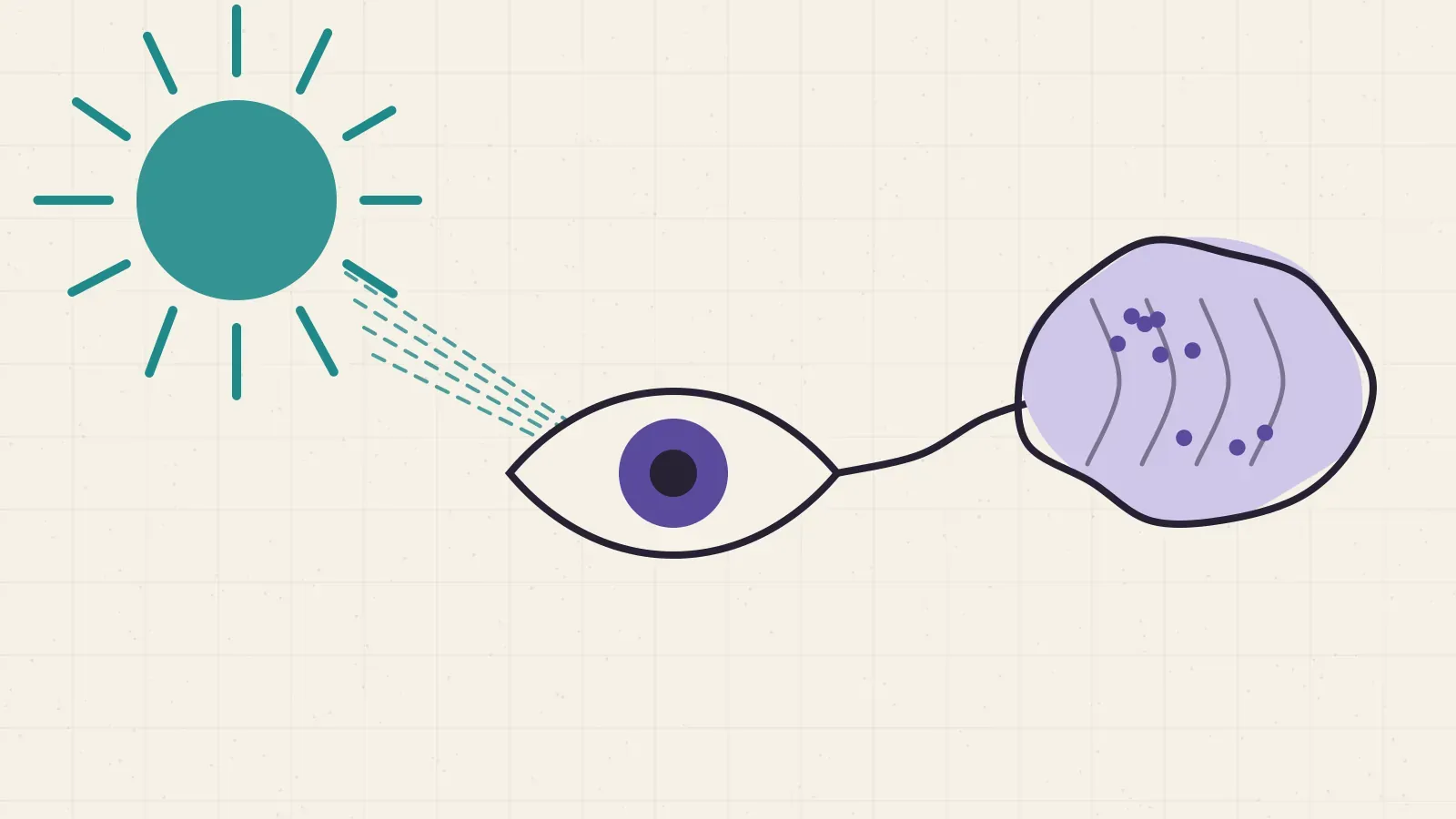
Daylight does not fill brain serotonin by persuading the gut to ship a parcel upstairs. Light does not need the intestinal pool at all. The route starts at the retina.
Rods and cones build the image you see. A third group, intrinsically photosensitive retinal ganglion cells, carries the pigment melanopsin. Those cells report how bright the world is, and for how long. Their axons run in the optic nerve to the suprachiasmatic nucleus, the master clock in the hypothalamus.
The clock keeps a rhythm about a day long even in constant dimness. Morning light, after a night of darkness, tells it that day has started. It then times body temperature, hormone release, alertness, and the raphe neurons that make serotonin on site.
Those neurons fire more across the waking day and grow quiet in sleep. Bright days and dark nights keep that contrast sharp. A flat indoor glow from breakfast to midnight blurs the cue. The enzyme still needs tryptophan. The clock still needs a retinal time stamp. Neither replaces the other.
Clock, pineal, and a hormone that is not serotonin
Signals from the clock reach the pineal gland by a long sympathetic path. In darkness the pineal releases melatonin, which marks night for tissues across the body. Light, read by the retina, holds melatonin down. The pineal can make melatonin from serotonin inside its own cells. That local conversion does not mean gut serotonin has become a sleep hormone. Miss the morning cue and the timetable drifts. The drift is a timing problem, not a shortage of intestinal serotonin.
Dopamine is not the same bottle
Dopamine is a related daytime alertness signal. It is not the same molecule. Neurons make it from tyrosine, through L-DOPA, not from tryptophan. Some cells go one step further and make norepinephrine. Serotonin is not on that line.
In the midbrain, dopamine neurons help score actions, support movement, and bias the brain toward engagement. That lean is easy to overdraw into a mood syrup. It is not one. In the retina, local cells make their own dopamine and help the eye shift from a night setting to a day setting. Retinal dopamine does not become brain serotonin. Brain serotonin does not become dopamine. Morning light can nudge both, and still it is a timer, not a blend.
Sleep architecture, set in the morning
Sleep cycles. Non-REM sleep deepens and lightens. REM sleep comes in longer stretches toward morning. That order, depth, and timing is sleep architecture. Hours in bed are only the frame.
Sleep pressure builds while you are awake and recedes in sleep. The circadian clock opens a window when sleep is easier and a window when waking is easier. Morning light is the strongest ordinary cue for pinning that clock to the solar day. Place the pin well, and the following night has a stable place to land. Miss it for several days and the window slides. You can be tired and still sleep late, light, or in pieces, because pressure and clock are out of step.
Serotonin sits on the waking side of this bargain. Raphe neurons fire in wake, slow in non-REM sleep, and go nearly silent in REM. They are not a sleeping draught. At night other systems lead, and melatonin marks the dark. Anchoring the morning protects the architecture of the night that follows. The gut is not asked to export serotonin after dark.
No lux number, no capsule
Ordinary rooms are dim beside a morning sky, even under cloud. Time outside, eyes open, early, gives the clock a cleaner stamp than a day under a ceiling. Very dark lenses blunt the cue. This is not a dose copied from a trial. No lux figure belongs here as a prescription. A supplement is not a retinal signal. The chain is photons, retina, clock, then serotonin made in the brain.
Two stories, kept apart
The popular merge smuggles. The gut makes serotonin, and brain serotonin takes part in mood, so people decide the gut writes mood and a capsule can finish what daylight started. Those facts do not yield that leap. A capsule of serotonin meets the barrier and stops. A capsule of tryptophan is an ingredient with brakes, not a sunrise.
This is not medical advice, and it is not a reason to start or stop a drug. If mood, sleep, or gut symptoms are severe, that is a clinical question, not a lighting tip.
See morning light with your eyes. Let the night get dark enough for melatonin to rise. Do not confuse a busy gut with a busy raphe.