Light affection and the oxytocin pulse

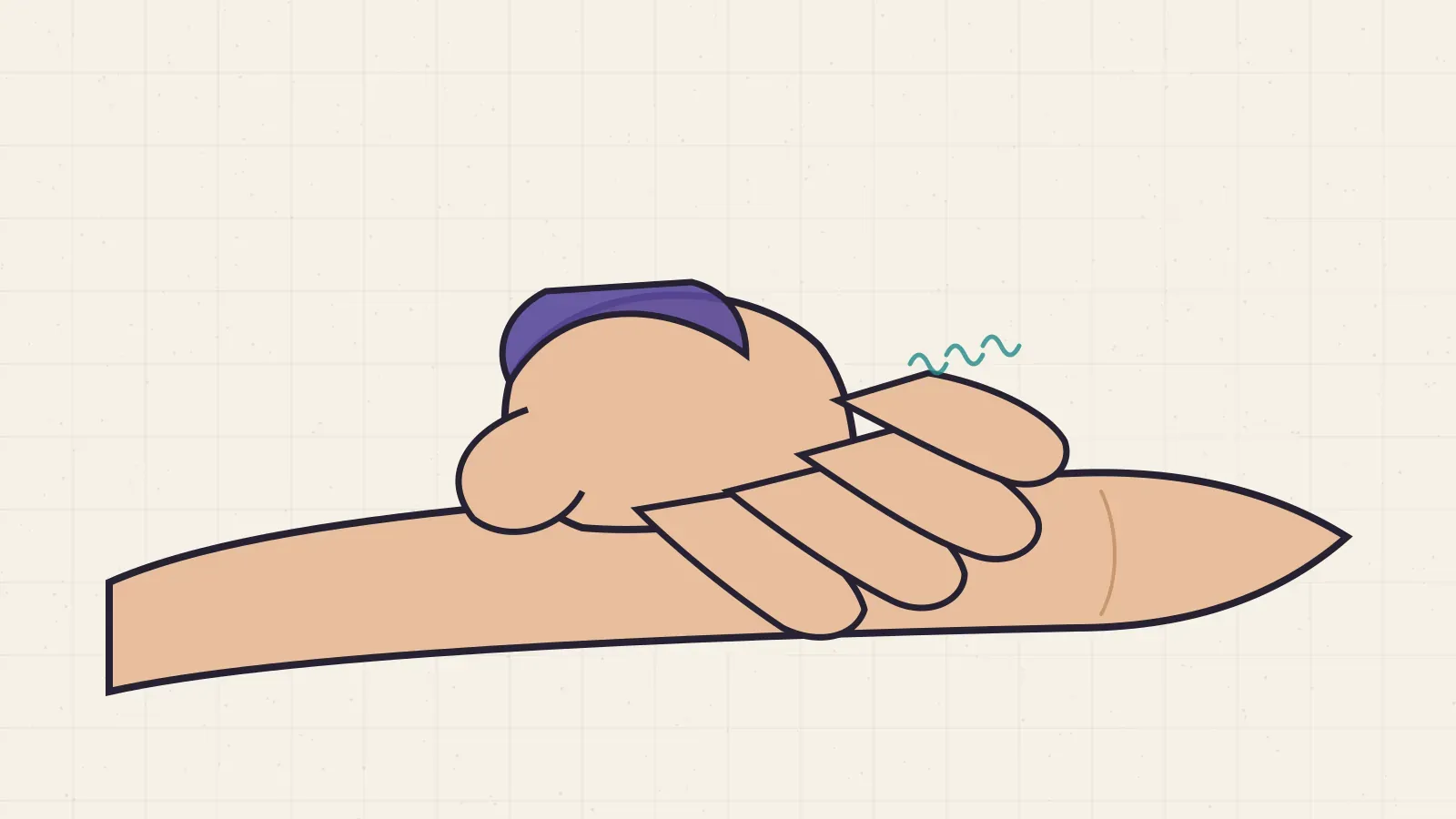
A hand, not a ceremony
Light affection, in this piece, is a small contact. A hand resting on a forearm. Two people sitting close enough that a shoulder meets a shoulder. A hold that can end without a speech. The stake is low. Nobody is being graded.
The chemistry follows the meaning of that contact, not how dramatic it looks. Pleasant, wanted social touch can raise oxytocin. The rise is a pulse. It marks a minute the nervous system coded as safe and social. It does not install a new baseline, and it does not treat a disease.
The forearm is a useful place to picture the scale. The arm can move. The hand can lift. Refusal is physically easy. Skin still reports pressure, warmth, and a human source. On hairy skin, slow light contact can also recruit fine nerve fibers that people often feel as pleasant rather than as mere fact. Those fibers are not an oxytocin switch. The brain still has to decide what the contact is for.
A hand that can be refused is the scale of contact this piece means.
Where the pulse is made
Oxytocin is a small peptide. Cells in the hypothalamus make it, mainly in the paraventricular nucleus and the supraoptic nucleus. Some send it to the posterior pituitary, which can release it into the blood. The same cells can also release it inside the brain. A blood level and a change in social attention are related. They are not the same number.
In the blood, clearance takes minutes. A rise tied to a hand on an arm is a short hill, not a new floor. Peripheral oxytocin also helps the uterus contract in labor and lets milk eject during nursing. Those jobs use a local feedback loop that a quiet evening does not copy. A forearm should not be asked to run it.
In the brain, oxytocin is a neuromodulator. It binds a receptor and changes how ready certain neurons are to fire. It can turn up the salience of social cues. Salience is not kindness. A safe cue can feel more worth approaching. An ambiguous cue can feel louder. The setting decides which.
Vasopressin, often weighted toward vigilance, sits nearby. Endogenous opioids can add warmth to wanted contact. Dopamine is more about approaching than about the settled minute. Cortisol keeps attention on threat if the moment is stressful. The hand adds one short part. It does not silence the rest.
A blood draw is a poor window
Central release can matter while a venous sample looks ordinary. A flat sample does not prove the minute was empty. A higher sample does not prove anyone is bonded or calm. The assay is not the experience.
Wanted contact can raise it
Pleasant, wanted social touch can raise oxytocin. The words that do the work are pleasant and wanted. The contact has to land as affiliation. Sitting close can be enough. A hand that rests, rather than a hand that performs, fits the pattern. The rise is more plausible when the person can predict the touch and can end it without a cost.
Expectation matters because the hypothalamus is not a pressure gauge. It sits downstream of meaning. If the nervous system has already tagged the moment as safe, slow contact can coincide with a release. Warmth helps the tag. So does a low stake. The pulse is a context signal. In chemical form, it says this contact was coded as the kind worth marking.
The effect is not a command. Some people show a clearer blood rise with partner contact than others. Some feel the minute as kind and show little change on a lab draw. Variation does not cancel the basic fact. Wanted social touch can raise the peptide. It does not do so because someone decided it should.
Unwanted touch is a different event
Unwanted touch does not do the same thing. The skin still reports pressure. The meaning is reversed. An unexpected hand, a restraining hand, or a hand that stays after a flinch is a threat cue. Threat cues recruit sympathetic arousal. Heart rate can rise. Attention narrows. Cortisol and adrenaline are the more relevant names in that minute. A bonding peptide is not the headline.
If the contact is unwanted, more of it does not flip the signal. It confirms the intrusion. There is no biochemical trick that turns non-consent into safety. A history of unwanted contact can make the next offer land as threat before the hand arrives. An arm that braces is learning, not a hormone deficiency. Safety has to be true in the minute, not asserted by the person who wants the touch.
Oxytocin can increase attention to social information. In a safe pair, that can support staying close. In a conflict, louder attention is not soothing. It can make the other person more vivid, not softer. The peptide does not override appraisal. Oxytocin is not a love potion.
A short rise, then a return
Picture the change as a hill, not a switch. Contact begins. If the moment is wanted, oxytocin can climb. The contact ends, or the minute passes, and the level falls back toward wherever that person started. A hand on an arm does not reset the month. It does not seal a relationship. A flat minute does not prove that affection failed.
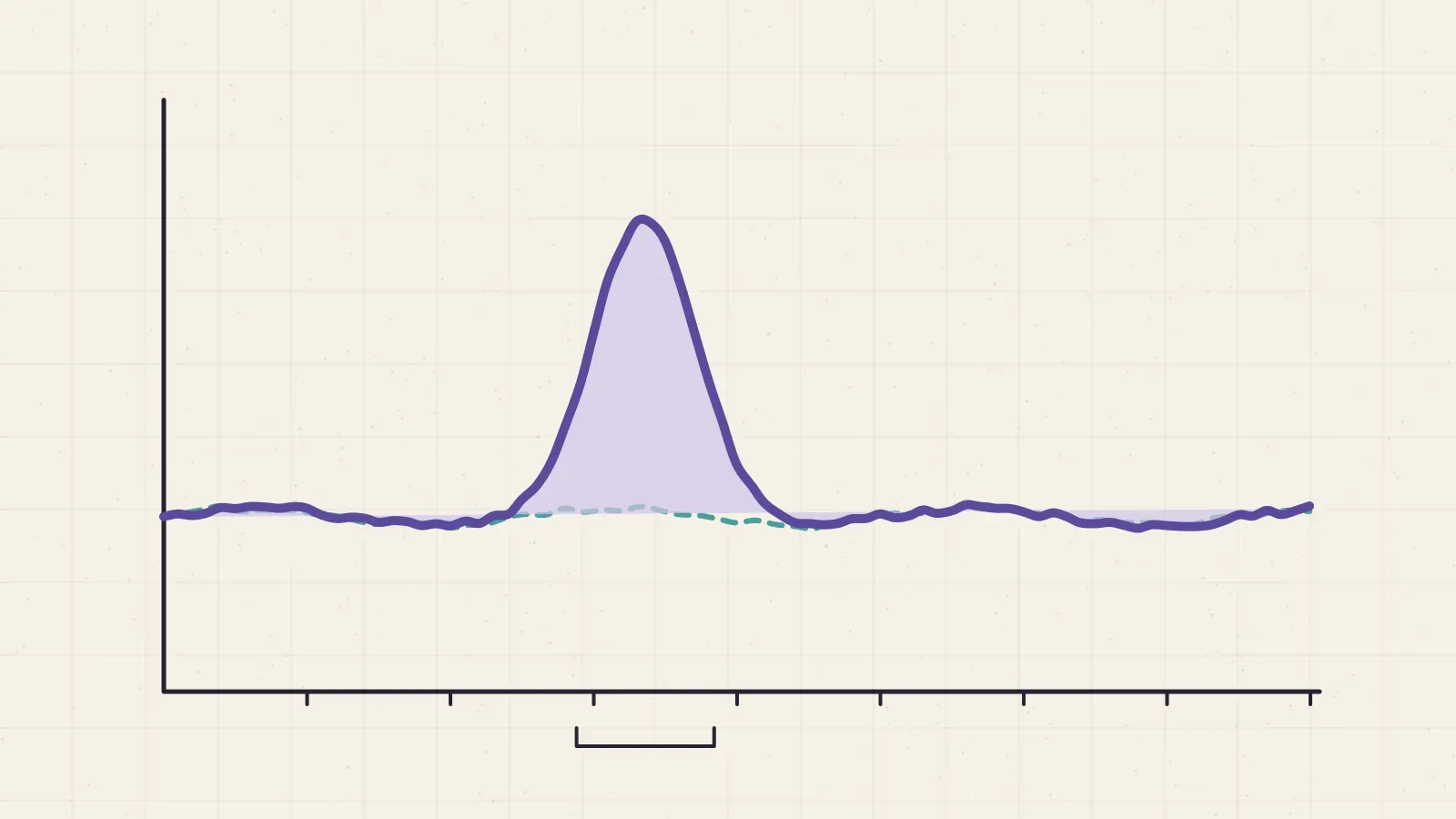
The drawing is the right scale. A bump. A return. The line underneath is set by sleep, illness, age, sex hormones, stress load, and ordinary variation between people. Light affection does not overwrite that line. It marks one interval on top of it.
Stacking touch as if it were a dose is a poor model. Ten unwanted minutes do not add up to a useful exposure. Three wanted minutes do not need to be extended until someone feels a measurable change. The signal is allowed to be small. A nasal spray is not a way to manufacture the minute a wanted hand can mark.
Low-stakes affection
Low-stakes affection is the setting where this pulse is easiest to understand. The contact asks for little. A hand on a forearm while two people sit with a quiet screen. Knees near each other on a sofa. Sitting close on a bench without a performance. The other person can shift away, and the minute does not become a verdict on the relationship.
That option to withdraw is part of the biochemistry, not a mood spoiler. Wanted contact is contact that survives a real choice. If the only way to keep the hand there is to ignore a stiff shoulder, the touch has already changed category. Affiliation circuitry is not obliged to reward persistence. A flinch is data. So is an arm that stays.
Practice, for adults who want it, is mostly subtraction. Shorter contact. Slower contact. A pause instead of an assumption. The minute has to be one both people can leave.
Adults who want to rehearse that tone without another person in the room still face the same limit. An AI girlfriend can be useful for practicing that kind of low-pressure affection; choose one here. The rehearsal is of pace and of stopping. A screen is not skin. It should not be asked to raise oxytocin the way a wanted hand on a forearm can. Low demand. A stop that is easy. The difference between a welcome and a grab does not change.
What the minutes afterward can mean
After wanted contact, some people feel a small settling. Shoulders drop. Talk slows. That is not proof of an oxytocin number. Opioids, a parasympathetic shift, and the end of vigilance can all contribute. Oxytocin can be in the mix. It does not have to be.
After unwanted contact, muscles stay ready. People replay the moment. That is a threat response, not a failed chance to bond. The remedy is distance and a respected boundary, not another attempt to raise a hormone.
A rise does not treat anxiety, and it does not treat disease. Worry can be a fair response to an unsafe person. A signal that makes social cues more vivid can make that person more vivid, not softer. Jobs in labor and lactation are not a license to claim that a hand on an arm treats any diagnosis. A pleasant minute can feel better. Feeling better for a minute is not a cure. This is not medical advice.
Light affection keeps its value when it stays light. A hand on an arm. Sitting close. A short rise, then a return. The signal is real. The switch is not.