What an orgasm changes in the next hour

The hour after, not the act
Orgasm changes the next hour. The change is hormonal and autonomic. It is not a treatment, and it is not a personality event. For this piece the setting is adult. The route can be masturbation. No other person has to be present for the chemistry to run. The act does not need a description. The hour after does.
What often follows is a drop in arousal, a rise in prolactin, and sometimes a rise in oxytocin. Dopamine belongs more to the approach than to the quiet that comes next. Some people feel a tension drop. Some fall asleep more easily later. Some feel alert, flat, or briefly low. The pattern has a direction. It does not have a guarantee.
Prolactin rises as arousal falls
Prolactin is a peptide hormone from the anterior pituitary. Lactotroph cells make it. In ordinary conditions, dopamine from a specific hypothalamic pathway holds those cells back. That pathway is the tuberoinfundibular dopamine system. It is not the dopamine circuit that tracks wanting and reward. The brake and the wanting system share a name and little else. Mixing them up is how the hour after gets turned into a cartoon of a crash.
After orgasm, prolactin often rises in the blood. The rise can begin soon after the event and can still be noticeable across the next hour. It is a common pattern in adults, including after orgasm from masturbation. It is not a disease signal. The size varies. Feeling is a poor assay for a pituitary peptide.
Not the same as a chronic high
A pituitary adenoma, or a medicine that blocks dopamine receptors, can hold prolactin up for weeks and can suppress libido. A short rise after orgasm is not that state. It is a transient hill on an ordinary day.
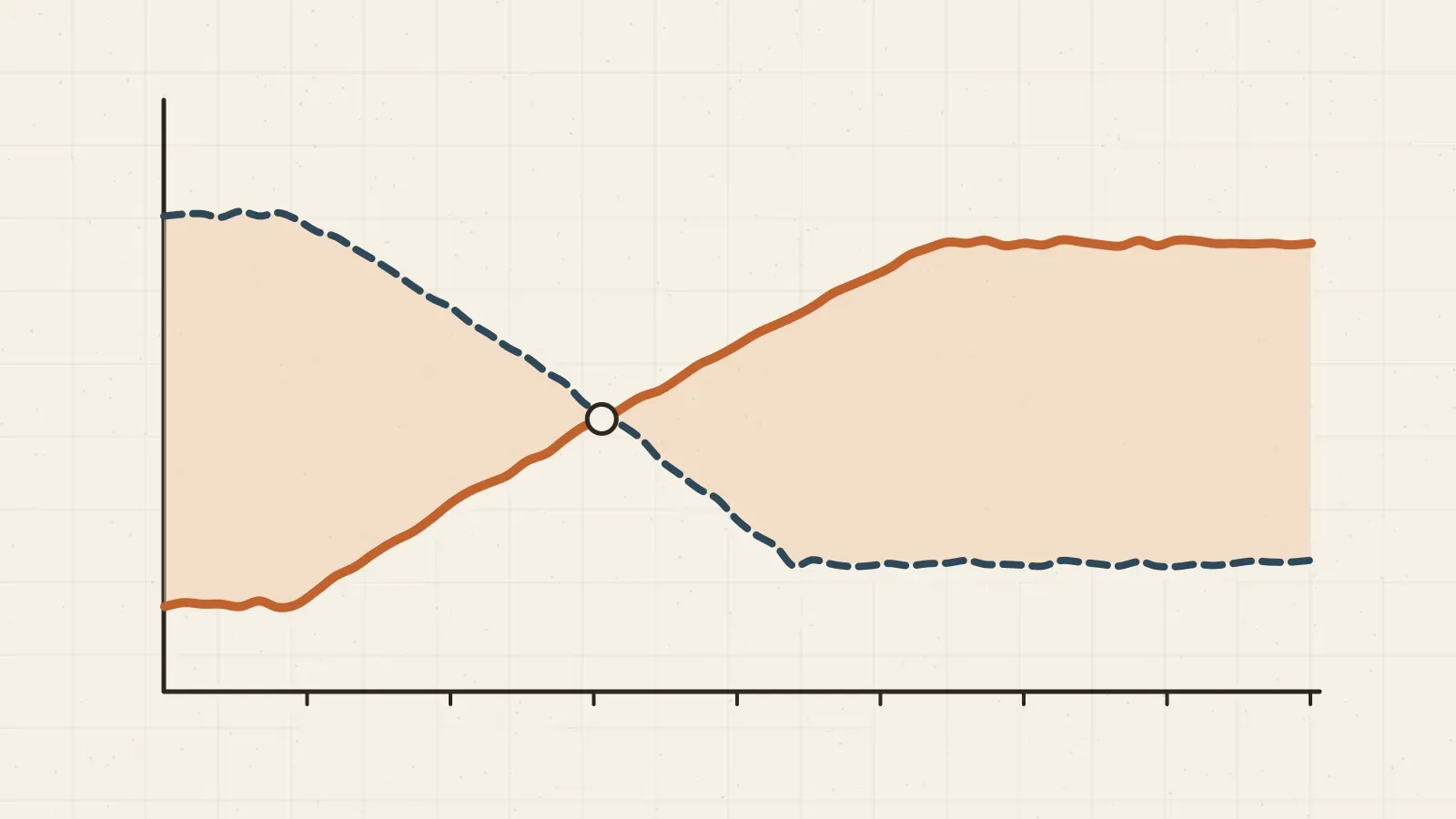
As prolactin climbs, sexual arousal typically falls. Heart rate and blood pressure, which rise during orgasm, come back down. Muscle tension eases in many people. The sympathetic surge gives way to a quieter setting. Urgency drops.
The picture is a crossing, not a moral. Arousal down. Prolactin up. Orgasm often hands the next hour a different mix than the minutes before it. Sleep, medication, cycle phase, and age can change the size of the rise. A person who feels nothing unusual has not failed the hour.
Two signals in the same hour
Oxytocin can rise around orgasm as well. It is a different signal from prolactin. Oxytocin comes mainly from hypothalamic cells and can be released from the posterior pituitary into the blood, and also inside the brain. Prolactin comes from the anterior pituitary. Different cells. Different brakes. Different jobs. They can both be higher in the same hour without being the same message.
Oxytocin’s time in the blood is short. If it rose with orgasm, it is the briefer hill. Prolactin is more likely to still be up later in the hour. One can coincide with the muscle contractions of orgasm. The other tracks the longer drop in arousal. Neither is a mood cure. A person alone can have either rise. Bonding is a social fact. A peptide is not a substitute for one.
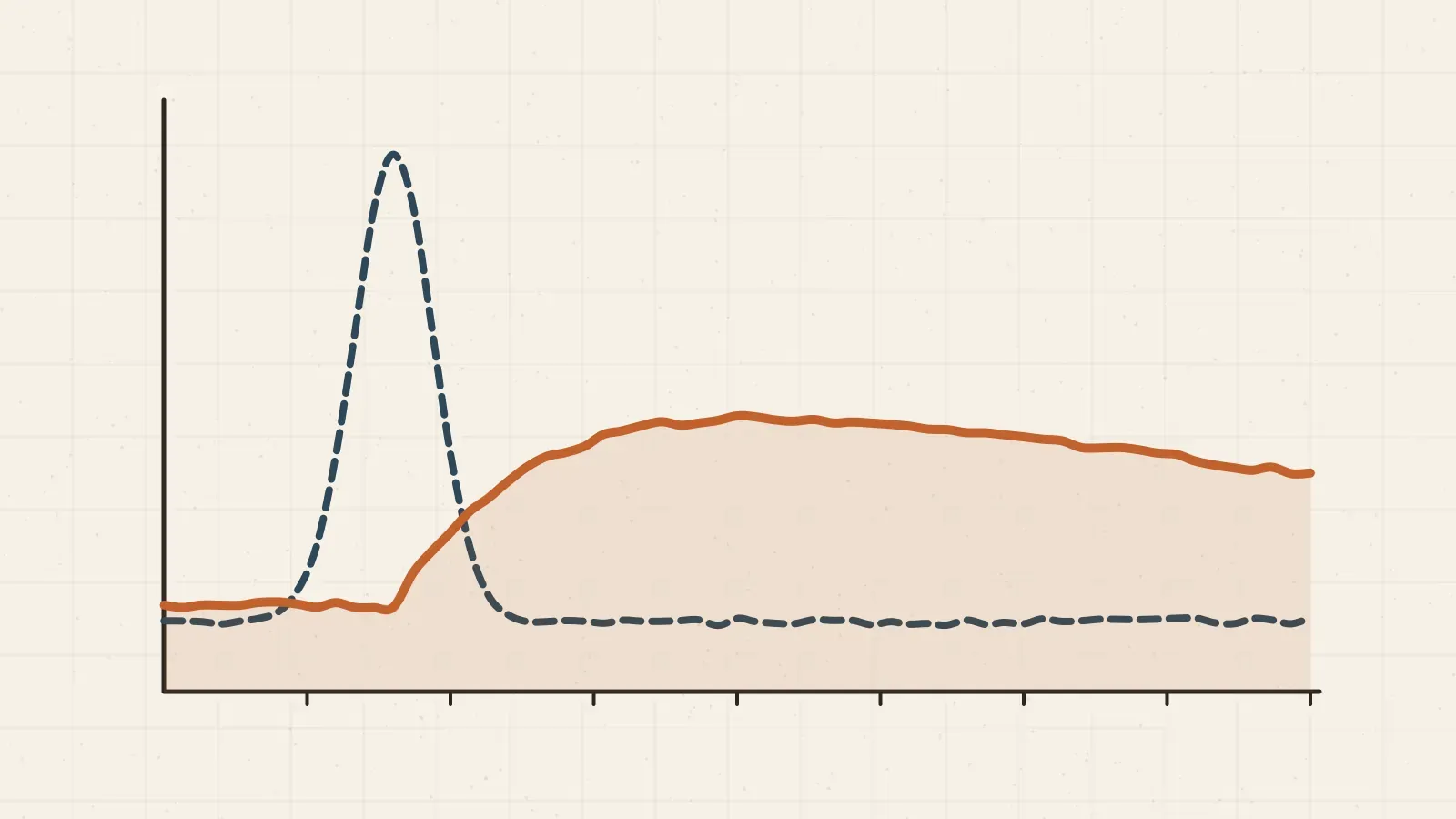
Keep the two lines apart. Oxytocin, if it moved, is a short mark tied to the event. Prolactin is the slower mark tied to the drop in arousal. The hour is a handoff between signals, not a single chemical mood.
Dopamine was the approach
Dopamine is more about the approach and the arousal than about the quiet hour after. Wanting, attention toward a sexual cue, and the building of arousal lean on dopaminergic signaling in circuits that support motivation. That is the lead-up. Orgasm is not a long dopamine high. The next hour is not one either.
The popular crash story borrows the wrong dopamine. Tuberoinfundibular dopamine inhibits prolactin. When prolactin rises, that local relationship is part of the endocrine conversation. It does not mean the motivation circuits have collapsed. A person can feel less sexual urgency without having emptied a reward system. Less urgency is a feature of resolution. It is not damage.
The lead-up can be private. An AI girlfriend can be useful when you want that arousal without a partner in the room; pick one there. The chemistry of the next hour still follows orgasm, not the presence of a partner and not the presence of a screen. A category of companion does not change prolactin’s job, and it does not turn the hour into a treatment. The wanting can be solo. The hormone shift follows the event.
After the event, sexual motivation often drops for a while. In many men that drop is a clear refractory period. Further arousal and further orgasm are harder, or unavailable, until it passes. In many women the pattern is shorter, partial, or absent, and further orgasm remains possible. Age can lengthen the stretch in men. These are variations in how resolution is wired.
Associated, not the single cause
A refractory period is associated with prolactin. The timing fits. Prolactin is often up while sexual responsiveness is down. When prolactin is high for other, longer reasons, sexual interest can fall, which makes the association plausible. Plausible is not the same as proven. Associated is not the same as sole cause.
Other signals sit in the same window. Serotonin tends to oppose sexual arousal and is another candidate there. Endogenous opioids can contribute to the settled, sometimes drowsy tone some people notice. Sensory circuits that were just intensely active have their own recovery. Blood flow in the pelvis is redistributing. Fatigue is ordinary. A story that gives prolactin the only pen is cleaner than the body is.
The honest picture is a cluster. Prolactin often rises, and the refractory period often overlaps that rise, especially in men. One signal does not have to explain the whole of sexual satiety. The next hour can be described without that overclaim. What can be said modestly is enough. There is often a tension drop. There is often a prolactin rise. There is sometimes an easier slide toward sleep later. Those are descriptions of a phase, not a prescription.
Sleep later is a possible effect
Some people fall asleep more easily after orgasm. When the effect shows up, it is usually about sleep onset, not about rebuilding a whole night. A person already near bedtime may cross into sleep with less effort. A person wide awake in the afternoon may feel a brief heaviness and nothing more.
Arousal has fallen, and muscle tension has often dropped. Autonomic balance has shifted off the sympathetic peak. Prolactin, which also rises in ordinary sleep, is higher than it was. Oxytocin’s blood pulse, if it came, is already short. Opioids may add a quieting effect. None of these has to be the whole explanation.
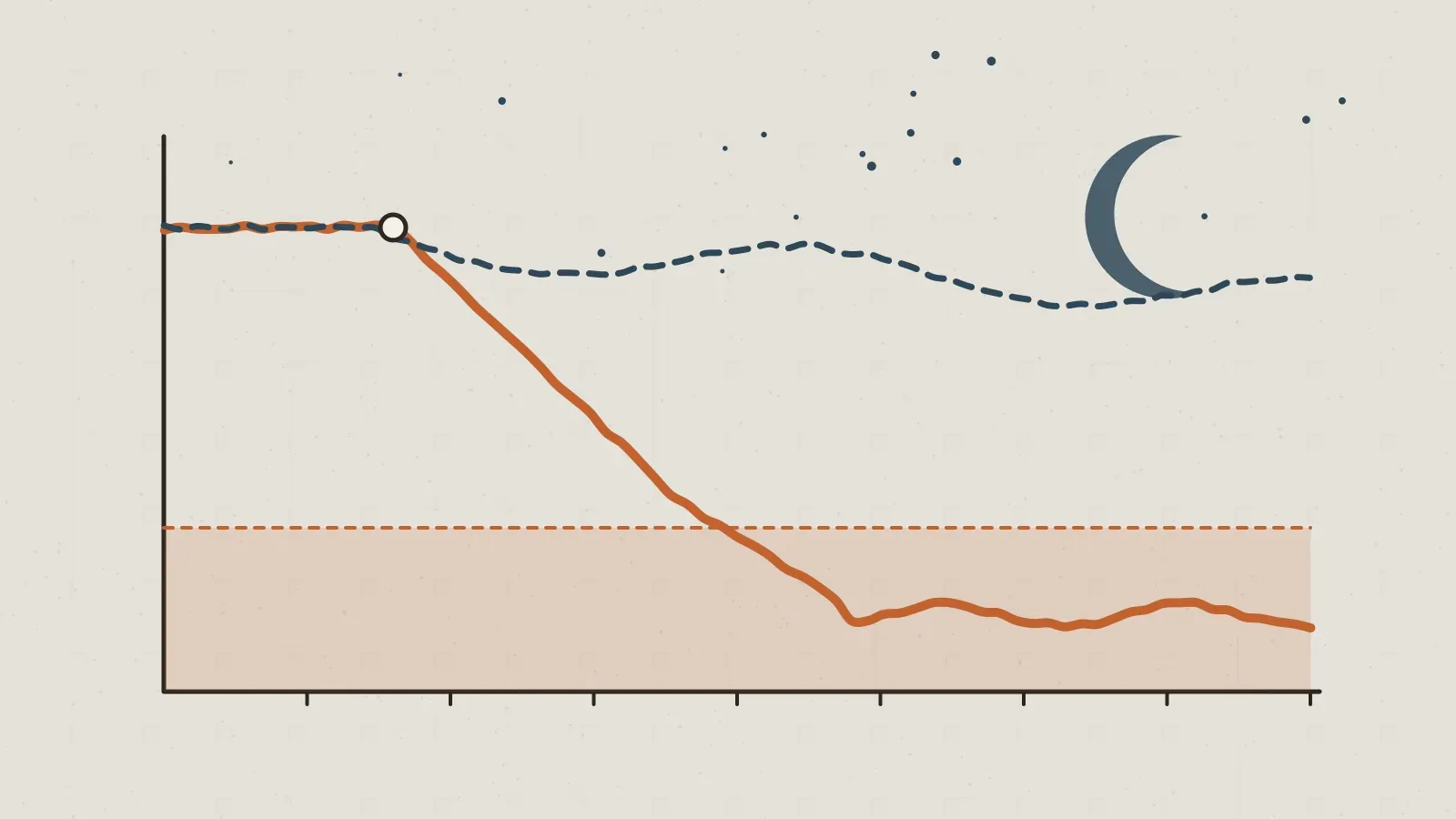
Later that night. Possible. Not a guarantee. Orgasm is not a sleep medicine. It will not fix insomnia or a short night caused by pain, noise, or worry. If sleep comes more easily, that is a side effect of resolution on that night. If it does not, the hormones may still have moved.
Some adults feel clear instead of sleepy. Others feel flat, irritable, or close to tears, even when the orgasm was wanted. That is not proof the prolactin rise went wrong, and it is not a reason to chase another orgasm. Mood afterward is variable. The hormone sketch does not own it.
What the hour does not do
The next hour is a hormone shift, not a cure. Masturbation does not prevent prostate cancer. Nothing in the prolactin rise, the oxytocin pulse, or the tension drop is evidence for that claim.
The hour does not treat depression. A tension drop is not an antidepressant effect. A person may feel briefly different, feel nothing, or feel worse. None of that is treatment. An orgasm is not care for depression or anxiety. This is not medical advice. Pain with orgasm, a sudden change in sexual function, or a known prolactin problem belongs with a clinician.
What remains is small enough to trust. After orgasm, prolactin often rises as arousal falls. Oxytocin can rise and then leave the blood sooner. Dopamine’s main role was the approach, not the quiet. A refractory period lines up with prolactin often enough to mention, and not cleanly enough to call prolactin the single cause. Some people sleep more easily later. Some do not. The hour is a shift. It is not a cure.