Why nerves misfire when you only drink water

The spike is a sodium event
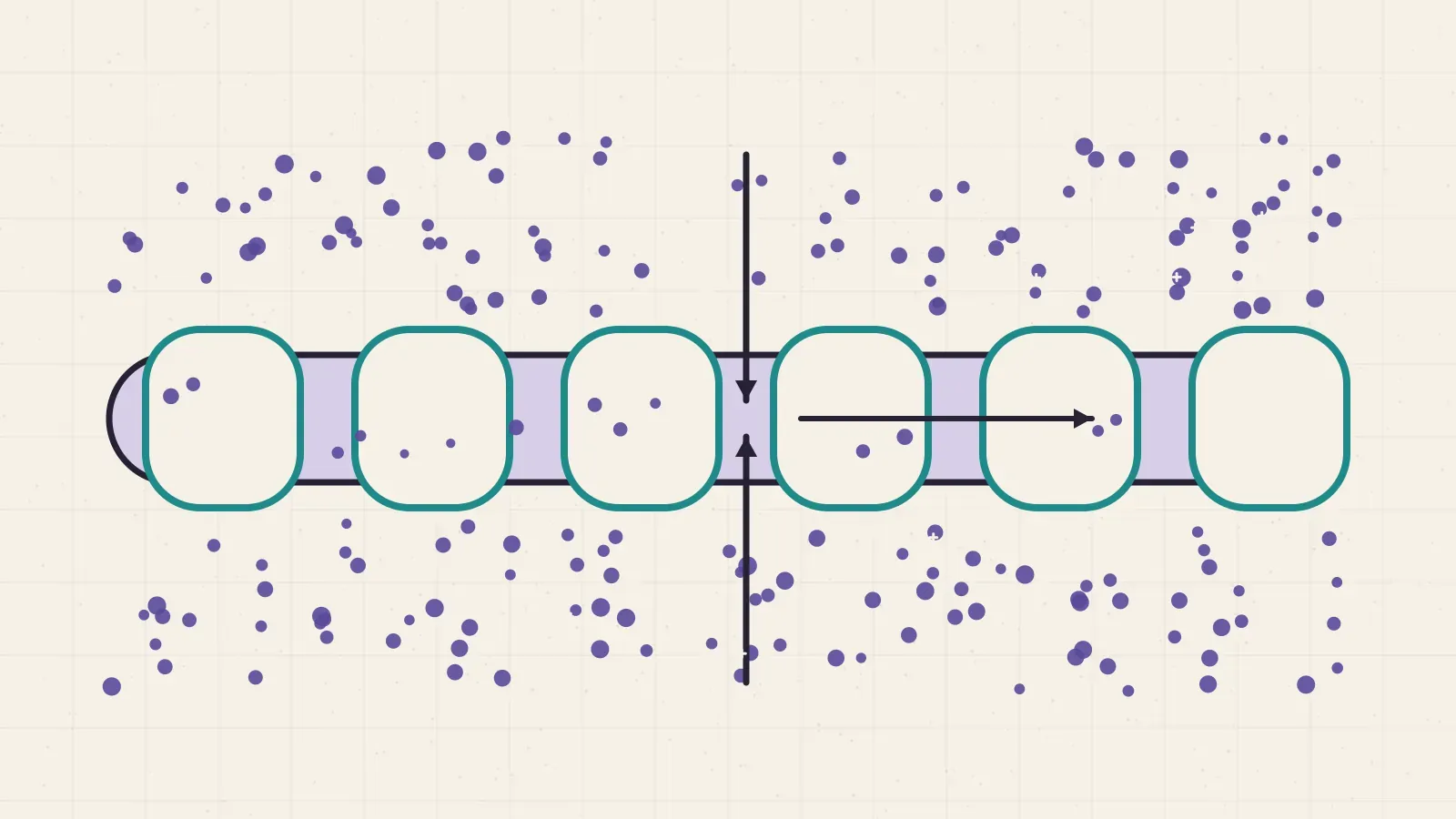
A nerve does not fire because it is inspired. It fires because sodium is higher outside the axon than inside, and because the membrane can open a door at the right moment. That difference is the sodium gradient. Flatten it, and the spike shrinks, stalls, or arrives late.
Drink large amounts of plain water during a long effort, and you can flatten the gradient from the blood side. The clinical name is hyponatremia: sodium in the blood is too low. During long effort it is usually a dilution. Free water arrived faster than sodium could match it. Confusion and nausea are common early marks. In severe cases the same dilution swells the brain, and the story gets worse.
How a quiet axon holds its charge
At rest, the inside of an axon sits negative relative to the outside. The membrane is a thin lipid sheet. Sodium channels are shut. Potassium channels are only partly open. Large negative proteins stay trapped inside, so a standing charge waits, ready and not yet spent.
Sodium is high outside and low inside. Potassium is the reverse. The spike itself is a sodium event. Potassium’s main job in the spike is the return toward rest. A sodium-potassium pump maintains the gradients. It burns ATP and moves three sodium ions out for every two potassium ions in. The pump is maintenance, not the spark. Sodium falls inward down a hill the pump has been defending. If outside sodium falls, the pump cannot invent ions the blood no longer holds.
Threshold, then a chain
A spike starts when the membrane reaches threshold. Voltage-gated sodium channels snap open. Sodium rushes in. The inside flips from negative toward positive, and that flip opens the next channels along the axon. Each patch rebuilds the spike with the sodium waiting outside it. Cut that supply, and each rebuild is weaker.
Channels inactivate quickly. Potassium leaves, and the inside returns toward negative. A single spike barely dents the bulk gradient. Thousands of spikes still need outside sodium to stay high. The reserve is blood and the fluid between cells. Myelin speeds the wave. It does not store the salt.
What long effort changes
Sweat carries water and salt, sodium chief among the salts. Sweat is usually less salty than blood. Lose sweat alone, and blood sodium often rises a little, because you lost relatively more water than sodium. That is the opposite of hyponatremia. The drop comes from what you put back.
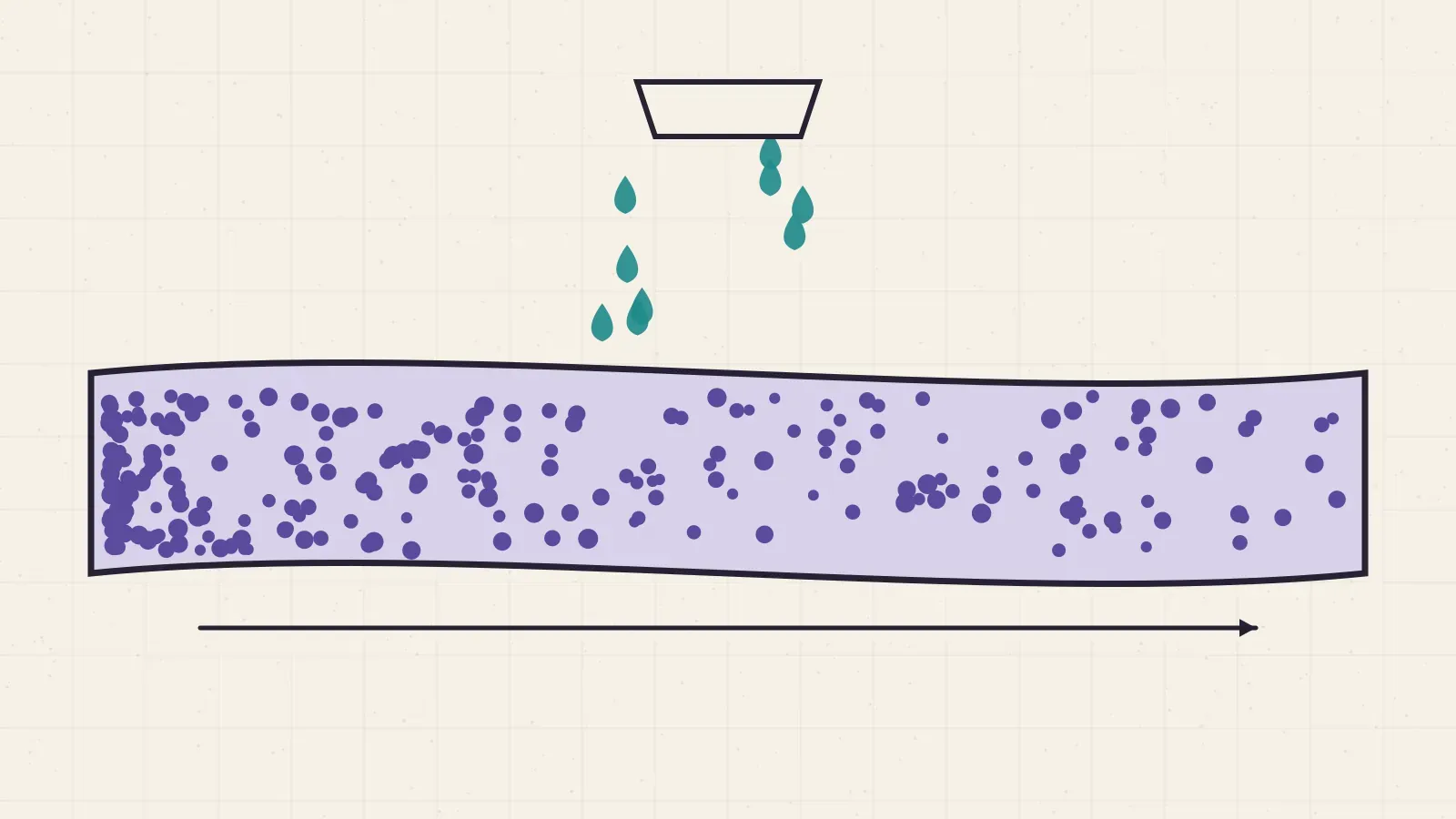
Plain water has essentially no sodium. A large volume of it, drunk while you are still working, adds free water to the blood. Sodium concentration falls. Fluid between axons is a filtrate of that blood, so outside sodium falls too. The gradient the spike depends on gets shorter.
During hard effort, vasopressin rises with work, heat, and nausea. The kidney holds water it would have shed at rest. Dilution sticks. Large amounts of plain water, a kidney that will not dump the surplus, and a membrane that needed the old outside concentration: stack those and nerves start to lie. The pattern shows up on efforts that run for hours, especially when drinking follows a schedule instead of thirst.
Signs that track the dilution
As sodium falls, people often feel sick in a waterlogged way. Nausea comes early. The stomach feels full even when the last swallow was only water. A headache may follow. Thinking gets sticky. Confusion means the brain itself is involved, not just a tired muscle.
Cramps, weakness, and a lag between intention and movement show up when conduction is unreliable. The command can leave the spinal cord and still arrive late, small, or not at all.
In severe cases the skull becomes the problem. Brain cells take on water when the fluid around them is too dilute. The skull does not stretch. Swelling raises pressure, slows blood flow, and scrambles signaling. Seizures can follow: firing that is too much, and badly patterned, rather than a clean failure to spike. Forcing more plain water into a confused, nauseated person pushes the same mechanism further. Stop the effort and get medical help. This column is not a treatment protocol, and it is not personal medical advice.
Swelling without inflammation
Once a tissue swells and a person feels ill, the easy word is inflammation. It is the wrong frame. Inflammation is an immune program. Immune cells move in. Signaling proteins call them. Vessels at the site leak on purpose. The tissue may heat, redden, and hurt. A large drink of plain water on a long effort is not that disease.
The swelling in hyponatremia is osmotic. Outside fluid has become weaker because sodium fell. Water crosses into cells until the strength matches. Cells puff up. No immune squad was invited. Working muscle can, separately, stir inflammatory signals, and next-day soreness has that flavor. Those signals do not explain a falling blood sodium. Heat from weather and work is not proof of an inflammatory disease either.
A big fluid shift is not an inflammatory disease. Swollen cells and a flattened sodium gradient still make nerves unreliable. The first sentence stops you from treating dilution as an immune flare. The second stops you from shrugging.
The wrong name suggests the wrong fix
Ice, rest talk, and anti-inflammatory habits answer a different biology. They do not rebuild outside sodium. They do not unswell a brain that took on free water. Swelling and inflammation sit near each other in ordinary speech. In this case they are not the same event.
Two ways a spike goes wrong
A normal spike needs a steep sodium entry. When outside sodium is low, the overshoot shrinks. Downstream synapses get a weaker or later kick. Some axons never reach threshold. In a circuit that times a step or a decision, late is a kind of wrong.
Swelling adds a second error. Water that entered the cell dilutes internal potassium, and resting charge shifts. The pattern is noise: too quiet in one axon, spontaneous in another. That is a misfire, not a simple off switch. Severe brain swelling can lean toward unpatterned extra spikes, then toward silence if pressure cuts blood flow. The physics of salt and water is enough. An inflammatory cascade is not required.
Thirst beats a schedule
The usable sentence is short on purpose. Salt with food, and do not force water past thirst on a long effort. That is not a dose. It is not a milligram target. It is not a timetable of bottles.
Thirst lags, and a wet mouth can blunt it. Even so, forcing water past thirst is the common path into dilution. Drink when you are thirsty. Stop when you are not. If you eat during the effort, let the food carry salt. A salty taste is a cue you can use. There is no honest universal scoop, because sweat, air, and pace all differ.
Plain water is a fine drink at a desk or on a short walk. The hazard is volume across hours, stacked on a kidney that is holding water, stacked on no sodium in the cup. You do not need a branded bottle to get this wrong. Any fluid that is mostly water and nearly salt-free can dilute you if you drink enough of it while vasopressin is high.
The mirror mistake
Fear of dilution can swing too far. Load salt without need, skip water you actually want, and blood sodium can rise. Cells shrink instead of swelling. Nerves do not enjoy that either. It is a different injury, still not an inflammatory disease, and still not a reason to invent a protocol.
If confusion, vomiting, or a worsening headache starts, self-adjustment is over. More water is the wrong experiment. A pinch of salt is not a rescue plan. Get medical help. Do not coach a confused person to push fluids.
The gradient is the whole point
Dehydration is a real risk on a hot long effort. Dilution is a real risk too. They are not the same injury, and the second is not fixed by more of the fluid that caused it.
The action potential is a sodium trick. Large amounts of plain water lower outside sodium when the kidney will not shed the surplus. Cells swell because water follows the osmotic shift. The swelling is not classic inflammation. It still makes signaling noisy, weak, or, in the brain, dangerously excessive. Salt with food. Do not force water past thirst on a long effort.