Growth hormone waits for deep sleep, not for an early bedtime

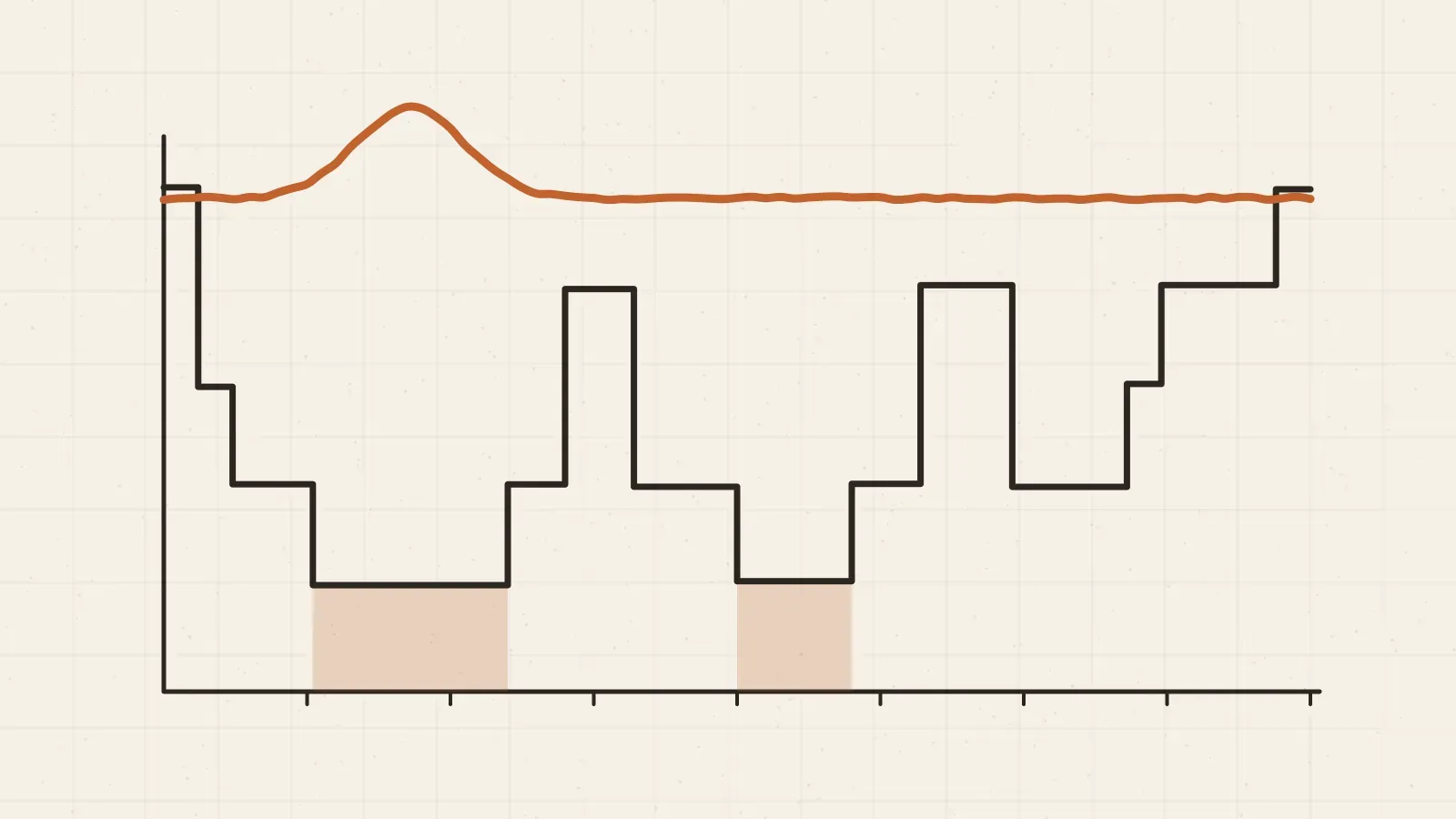
Growth hormone does not take orders from the nightstand clock. It takes a cue from a stage of sleep. The largest pulses in adults arrive during slow-wave sleep, mostly in the first half of the night. An early bedtime can sit beside that stage. It is not the mechanism. Lie down early and spend the hours in light, broken sleep, and the big pulse has nothing solid to ride.
Bedtime is a decision. Slow-wave sleep is a brain state. One moves with a plan. The other has to show up.
A stage, not a schedule
Sleep is not one condition. Across a night the brain cycles through lighter stages, rapid-eye-movement sleep, and slow-wave sleep. Slow-wave sleep is the deep stage. The waves are large and slow. The sleeper is hard to wake. Breathing is steady. The first long block usually sits in the first cycle or two. For most adults that means the first half of the night.
Later cycles hold less deep sleep. The night tilts toward lighter sleep and dreaming as morning nears. Growth hormone follows that tilt. The largest pulse tends to sit on the first deep block, not on the last hour before waking, and not on a chosen bedtime.
The first deep block
A hypnogram makes the pairing visible. Time runs across the page. Stages step up and down. The tallest hormone spike sits where the trace first drops into slow-wave sleep. Not at lights-out. On the stage.
Move bedtime later and that first deep block usually moves with it. The pulse moves too. The wall clock is not the trigger. An early bedtime helps only when the first cycle reaches the stage and holds it. Alertness, noise, pain, alcohol, or a meal still being digested can keep that first hour light. The clock looks disciplined. The recording does not.
How the pulse is released
The pituitary releases growth hormone, but it does not decide alone. The hypothalamus sends two messages. Growth-hormone-releasing hormone says secrete. Somatostatin says hold. When the releasing signal wins, a pulse enters the blood.
Those same signals push the brain toward slow-wave sleep. The circuitry that deepens sleep and the circuitry that opens the pituitary gate share a neighborhood. In the first deep cycle the releasing signal is often high and the brake often low. The pulse rides that window.
The link is a strong tendency, not a lock. Deep sleep and the pulse can come apart, more often with age. In younger adults the first deep block is still the right place to look.
Smaller pulses happen by day. The night pulse tied to slow-wave sleep still dominates in many adults. Lose it and the axis has lost the largest burst it usually makes. That burst fires when the stage arrives. It does not check a bedtime goal.
A signal, not a construction crew
Growth hormone is a message. It binds receptors on liver, fat, muscle, and other cells. The liver answers largely by making insulin-like growth factor 1, a second message in the blood and in the tissue. Together they nudge fuel use, fat breakdown, and protein handling. In children they talk to growth plates. In adults the talk is maintenance and fuel, not a nightly building shift.
They do not pour new tissue into muscle while a person lies still. Muscle changes when it is loaded, fed, and given days. Amino acids have to be there. Fibers have to have worked. Local signals have their own say. A growth-hormone pulse can join that conversation. It cannot replace the loading, the food, or the repetition.
Calling deep sleep a muscle-building shift turns a hormone into a crew you can book by moving bedtime earlier. The biology does not take that booking. A broken night does not erase muscle already built, either. It can blunt a signal that usually arrives with the first deep block. That is the claim the night supports.
Cortisol keeps a different night shift
Cortisol runs a nearly opposite pattern. On an ordinary night it is low in the first half, while slow-wave sleep and the large growth-hormone pulse do their paired work. It rises later and climbs toward morning, peaking around waking. That rise helps meet the day. It is not a rival project aimed at the first cycle.
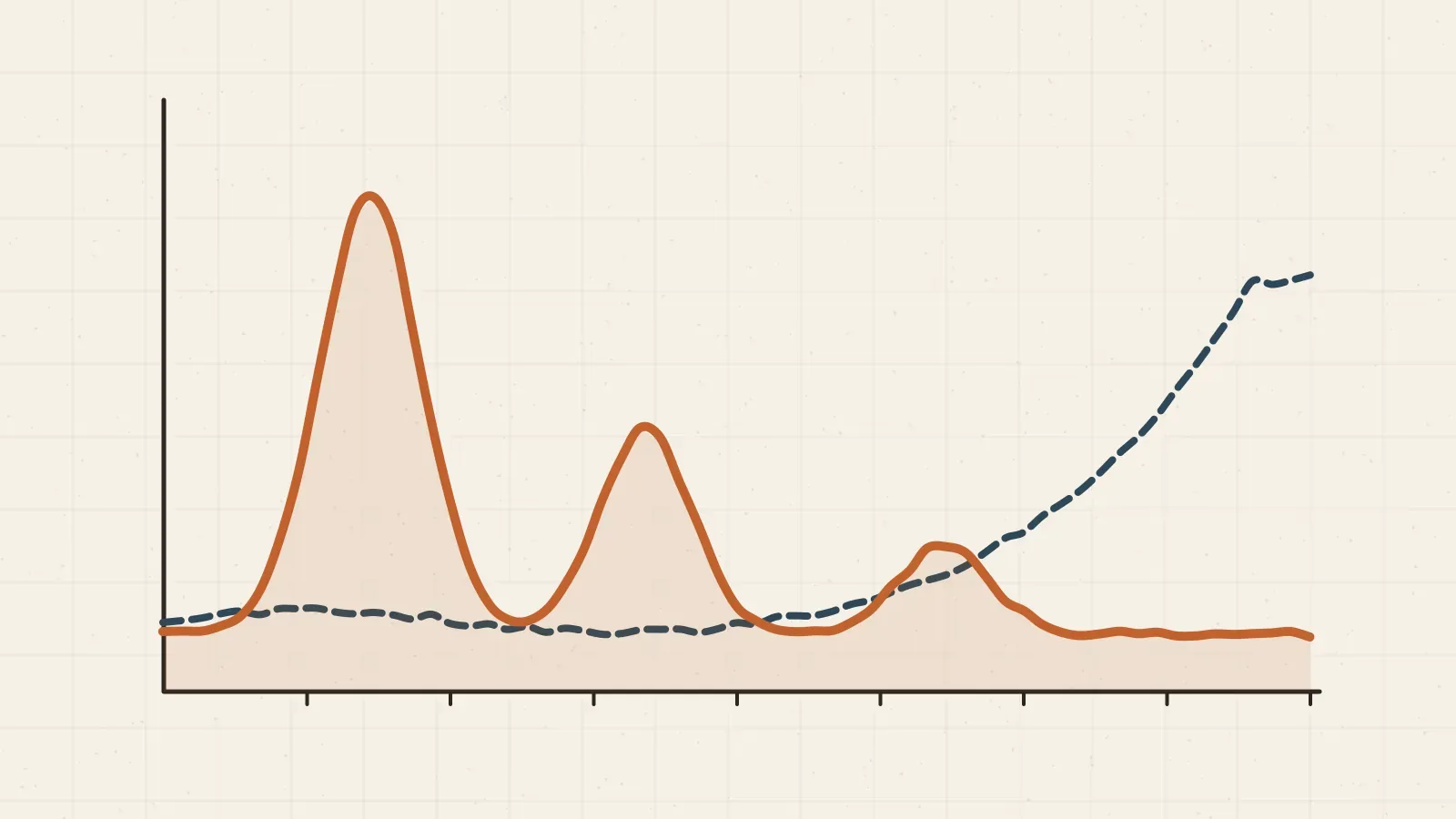
These hormones are not a seesaw a person can yank. Cortisol does not simply block growth hormone. Growth hormone does not switch cortisol off. One set of drivers is tied to the first deep stage. The other is tied to morning, and to stress when stress intrudes. The ordinary night shows a quiet cortisol floor under the big pulse, then a rise after that pulse has had its main chance.
Severe stress can lift cortisol early and fragment sleep. Both patterns suffer. That is stress physiology, not a bedtime trick. Leaving the early floor quiet is not a plan to flatten the morning rise.
Restriction can shrink the pulse
Cut sleep short and the pulse often shrinks. The cut bites hardest when it removes the hours where slow-wave sleep clusters, or when short nights repeat and the architecture thins. Amplitude falls. The burst remains a burst. It carries less signal.
A night awake removes the sleep-linked pulse for that night. Noon does not issue a full replacement. One late night does not rewrite a body. Repeated restriction gives the signal fewer full chances. The pulse rises and falls inside the deep stage, so a morning blood draw misses it.
Why an early bedtime misses the point
An early bedtime is a plan about the clock. The pulse is an event about brain state. They overlap only when a person is sleepy enough, and left alone enough, to enter slow-wave sleep soon after lying down.
Go to bed early and still alert, and the first hour may be light sleep or none. The deep block waits. The pulse waits with it. A long wake after that early start can spend the first-half window in pieces. Later sleep is still sleep. It is less likely to hold the long deep trough the largest pulse uses.
A later bedtime is not automatically worse. A delayed night with a solid first deep block still offers the stage. The mechanism is still not a rule about a certain hour in bed. It is whether slow-wave sleep arrives in a block the axis can use.
The myth says the hormone rewards punctuality. The recording says it rewards a stage. Punctuality can serve the stage. It cannot stand in for it.
What fragments the deep block
Alcohol can fragment slow-wave sleep. The first stretch may feel heavy. As alcohol clears, sleep lightens and breaks. Arousals multiply. One trough becomes short dips with wakes between them. The hormone was waiting for the trough, not for the heavy feeling at lights-out.
A very late heavy meal can break the block another way. Digestion is still running. Core temperature stays high. Reflux or a full stomach pulls sleep toward lighter stages. That can keep the first cycle from settling. Without that settle, the pulse loses its platform.
Shards instead of a trough
Noise, pain, a hot room, and repeated brief awakenings split the block too. Deep sleep appears as shards. Time in bed is not slow-wave sleep. The hormone grades the stage, not the log.
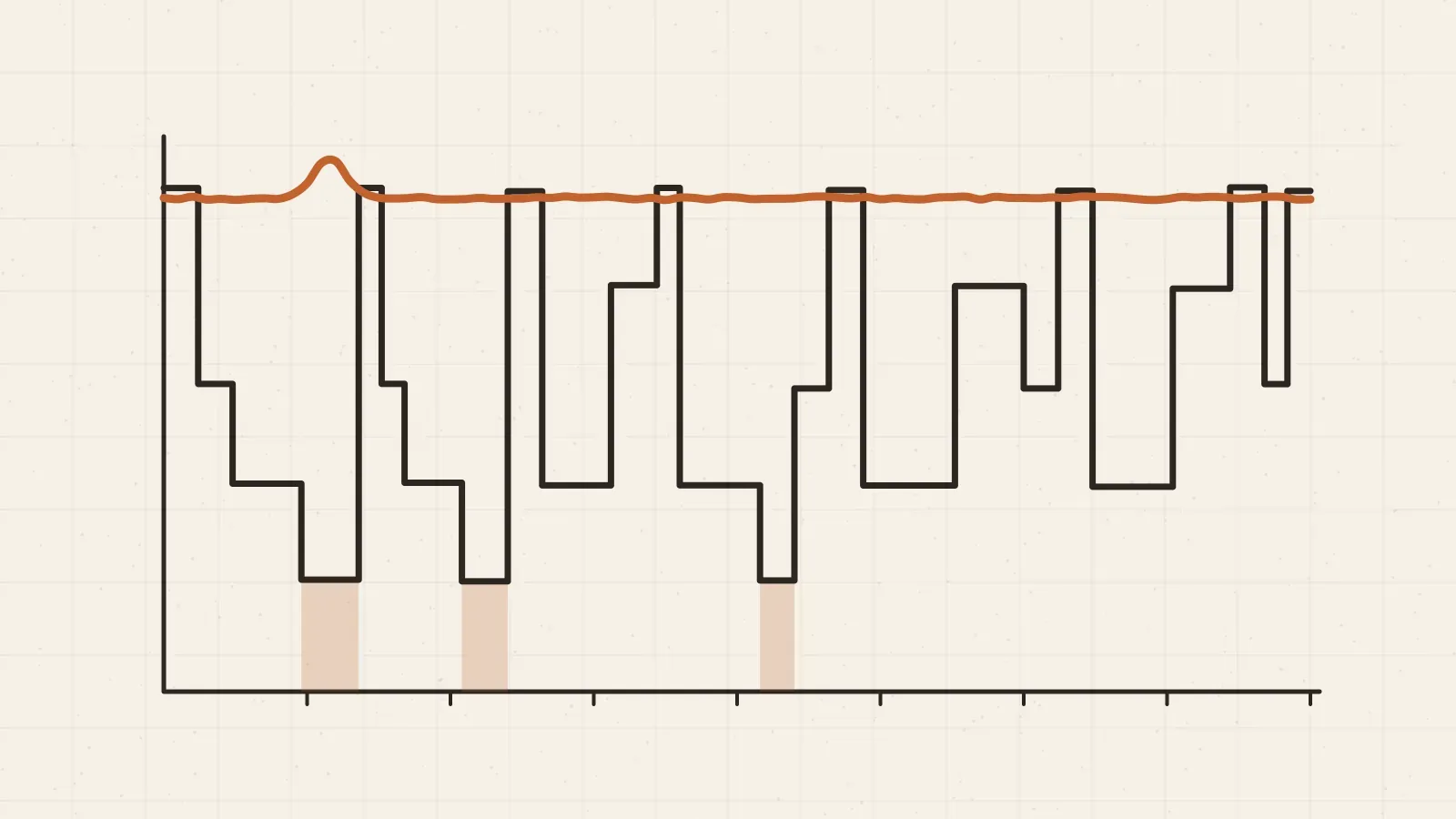
Age thins slow-wave sleep, and the night pulse tends to thin with it. The long first-cycle pairing is simply less generous. An early bedtime cannot manufacture a stage the brain no longer enters for long.
What the night is actually offering
Give the first cycle a consolidated deep block, and the largest growth-hormone pulse has its usual place. The first half of the night matters more than the minute sleep was supposed to start. Alcohol and a very late heavy meal trade a block for fragments. Repeated short sleep can turn the pulse down.
The hormone will not build tissue on command. It sends a signal into a system that still needs food, loading, and ordinary days. Sleep is where one loud version of that signal prefers to fire. It is not a workshop opened by winding the clock back.
None of this is medical advice.