What the day-after ache is actually signaling

The ache arrives on a delay
The day after a long effort, worked muscles often feel dull, stiff, and tender. Stairs announce themselves. People call the whole thing inflammation and move on. The word is doing too much.
The late ache is delayed onset muscle soreness. It is not the burn during the session. It is not a fever. It is not chronic inflammation sitting in the blood for months. It is a local note from tissue loaded in a way it was not ready for. The note arrives late. That timing is the first clue.
Lactate is the usual suspect, and the wrong one. The heavy feeling during hard work has many parents. Lactate is more a fuel in transit than a poison left behind. Whatever the session produced is largely gone before the next morning. An ache at breakfast, often worse the day after that, cannot be leftover acid.
Two clocks, two maps
In ordinary speech, inflammation means the body is angry. Hot, swollen, painful, out of order. In biology the word covers responses that can be brief and local, or sustained and body-wide. Those are different programs on different clocks.
Chronic systemic inflammation is the sustained kind. Immune signaling stays nudged on. The liver keeps releasing C-reactive protein, a marker clinicians watch when that ongoing pattern is the question. Tumor necrosis factor often sits in the mix. The geography is wide. Fat tissue, vessel walls, an unresolved infection, an autoimmune attack. The signal lives in the circulation. It does not pack up when a workout ends. A person often cannot point at one muscle and say the problem is there.
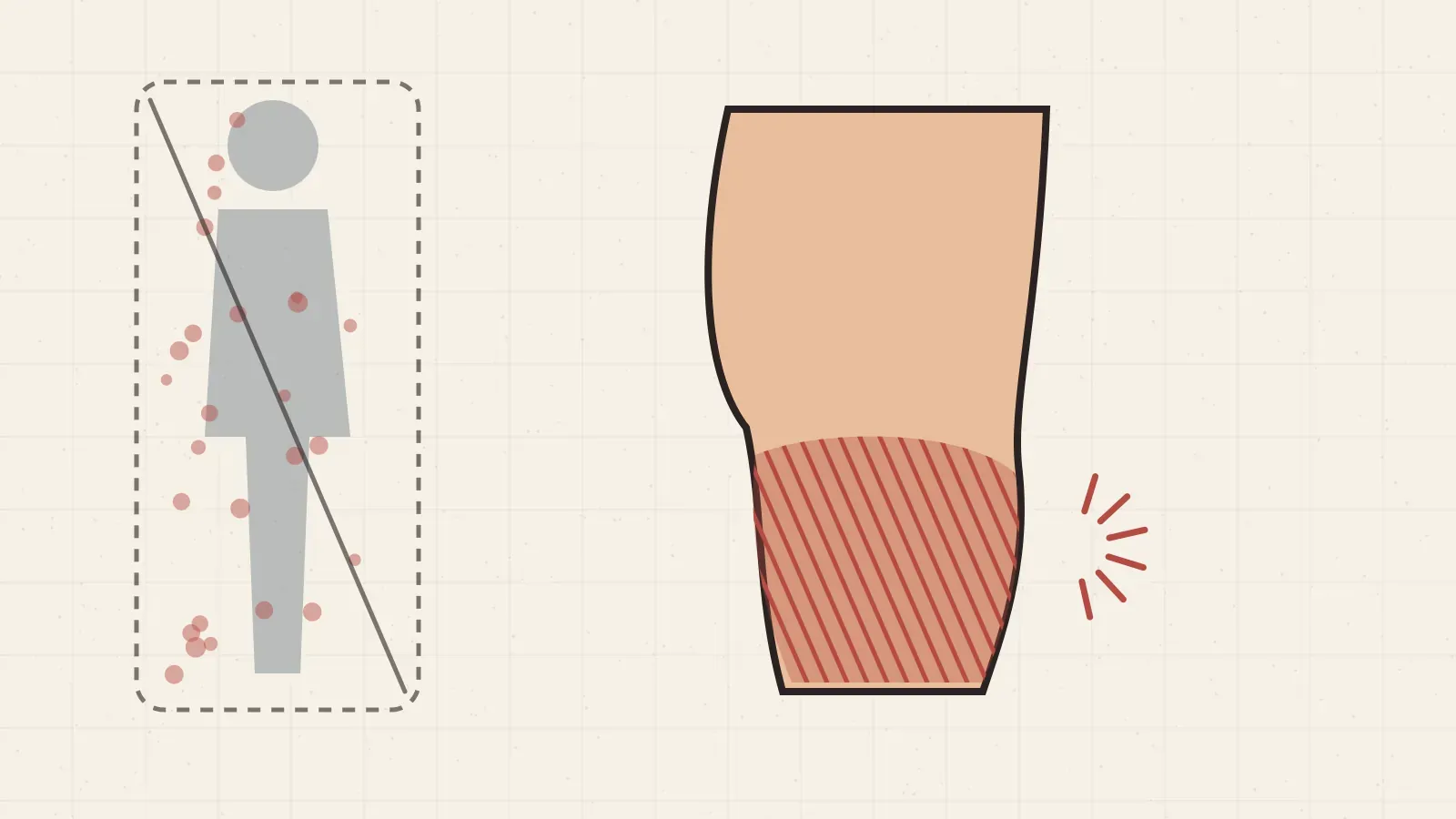
The day-after ache is the other map. It lives in the muscles that did the unusual work. The quiet calf is fine. The one that ran the downhill is not. Motion shrinks where the tissue is swollen, not in a random joint on the far side. Wrecked quads and ordinary hands are a local letter. Systemic fire does not draw a map that neat.
A very damaging bout can nudge blood markers for a short window. They settle afterward. That is not the chronic pattern, and no figure for C-reactive protein belongs here.
Soreness borrows the word fairly. Fluid, immune cells, and touchier pain fibers are local tools. Importing the chronic meaning is the mistake. The stairs are rude because one muscle is mid-repair, not because the blood has declared a flare.
What leaves the muscle during the work
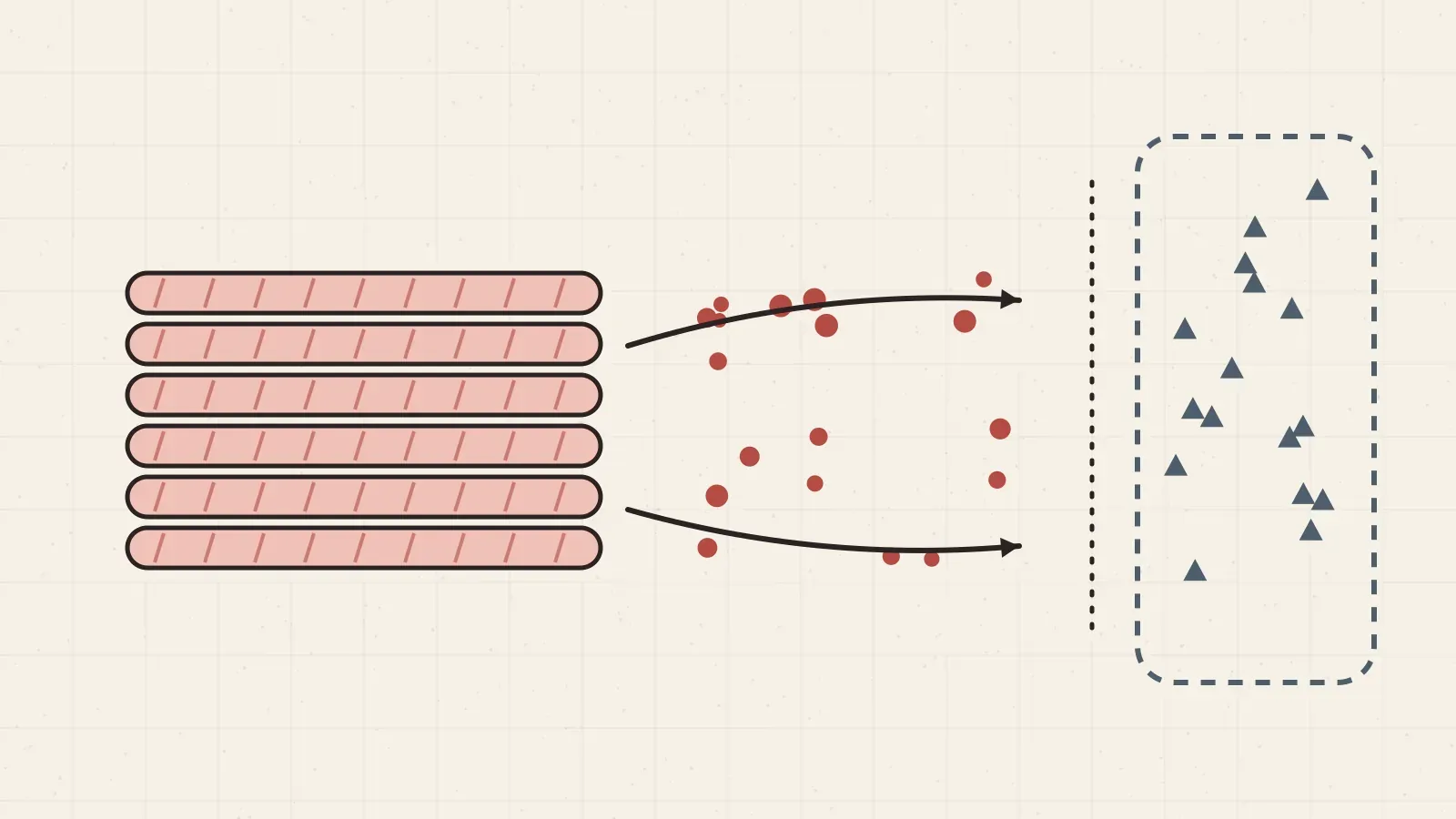
A second confusion happens earlier, while the effort is still going. Working muscle releases interleukin-6. IL-6 is a cytokine, a protein immune cells also use, so the name sounds like illness. During exercise it is a different job.
Contracting muscle can release it as a myokine, a signal to other organs. The rise tracks the work. Long efforts and low muscle glycogen draw it out. It is transient. When contractions stop, the signal falls. It does not sit for days as a standing alarm.
The dispatch is largely about fuel. Muscle IL-6 can tell the liver to keep glucose output up. It can push fat cells to release fatty acids. After the burst, calming signals often follow, including IL-10 and a receptor antagonist that dampens interleukin-1. That sequence is a work order plus a cleanup crew. It is not an alarm left ringing.
Not the disease version
Context decides the meaning. In ongoing inflammatory disease, IL-6 is often sustained, and it often keeps company with tumor necrosis factor and with a liver still making C-reactive protein. The source is immune activation that has not stood down.
Exercise IL-6 is not that company. Muscle can release it without a matching surge of tumor necrosis factor. The source is contraction. The clock is the session. Calling both events the same reading mislabels a keep-the-lights-on signal as a fire.
The day-after ache is not this pulse either. The pulse belongs to the hours of work. The ache belongs to the repair window that opens later. Same hard session, different letters. One asks distant organs for fuel support. The other is the local cost of strained fibers, plus cleanup.
Debris, fluid, and a crew
Repair after unaccustomed work is physical. Lengthening contractions are the usual provokers. Lowering a weight, running downhill, braking on a descent. The fiber produces force while being pulled longer. Sarcomeres do not share that strain evenly. Some are pulled past a comfortable overlap. Membranes get leaky. Calcium handling, which every twitch needs, gets noisy.
That is microdamage, not a tear you can see through skin. The muscle can still work the next day. It works with a complaint, and with less spring, until disrupted parts are cleared and rebuilt.
Fluid follows. Local vessels get leakier. Water and proteins shift into the tissue. The muscle can feel tight in its sheath. Swelling sits in the same broad window as the soreness, then recedes. Second-morning tightness is partly that fluid, not a verdict on a drink.
Immune cells clear the debris. Neutrophils tend to arrive early. Macrophages follow. Early cleanup is blunt. Later signals tilt toward rebuilding. First the debris. Then the rebuild.
Satellite cells parked beside the fibers wake when the damage needs them. They help repair the fiber. That is ordinary maintenance after a novel load, not a prize for suffering. Soreness is a side effect of the window, not a meter of useful rebuilding.
A local threshold
Pain fibers here are not a whole-body siren. They answer to pressure, to mediators such as bradykinin and prostaglandins, and to a dropped threshold. A light poke hurts because that tissue got touchier. The person did not become fragile everywhere.
The stairs hurt where fibers lengthened under load, swelled, and grew touchier. Session IL-6 may already be gone. The ache is what remains on site. Easy movement can improve the slide without having finished the repair.
The wrong verb for cold water
Cold soaks come with a slogan. The slogan says they kill inflammation. The verb is wrong.
Cold changes sensation fast. Nerve conduction slows a little. Pain gets quieter. Blood flow shifts with temperature. Climbing out less sore than you climbed in is a change in the report, sometimes in swelling. It is not deletion of a repair program.
Fluid, immune cleanup, and satellite-cell work are how a fiber deals with microdamage. That program is not a fire to put out. Turning the signals down after every hard session dampens a local sequence muscle uses to come back better prepared. Repeated cold after lifting can blunt some of the gains those sessions were meant to build. That is a reason to retire the slogan, not a reason to fear a cold river. The ache fades across several days in most people either way. Comfort measures edit the volume. They do not rewrite the letter.
A status report, not a score
The day-after ache says a muscle was loaded in an unusual or lengthening way, enough to disrupt some machinery. Fluid shifted. Immune cells are cleaning up. Pain thresholds there are temporarily lower. It does not say the blood is in a chronic inflammatory state. It does not say session IL-6 was a fire alarm.
Ache intensity is a poor guide to adaptation. A new drill can leave someone very sore and little improved, or moderately sore and clearly better prepared. Chasing soreness as proof of a good session misreads a side effect as a score. The useful part of the signal is the address. It marks which tissues took the novel strain.
The adaptation is quiet. Fibers come back with a slightly better tolerance for that strain. The next downhill disrupts less. If soreness returns, it is often milder. The tissue kept the receipt.
A local ache after hard or novel work is ordinary physiology, not a diagnosis. Sharp joint pain, dark urine, or an ache still climbing after many days is a different message. So is fever, a chest symptom, or swelling outside the muscles that worked. Those belong with a clinician.
Muscle the day after is often sore, a little swollen, and busy with repair. That can feel like a body on fire. Microdamage, fluid, and immune cleanup are local and time-limited. IL-6 from the working muscle was an earlier fuel signal, mostly over by the time the stairs hurt, and not the IL-6 of ongoing disease. Chronic inflammation is a third event, wider and longer. Tender quads do not diagnose it. Read the address before calling it a fire.