Lactate is a fuel, not the thing that burns

Fuel with a bad reputation
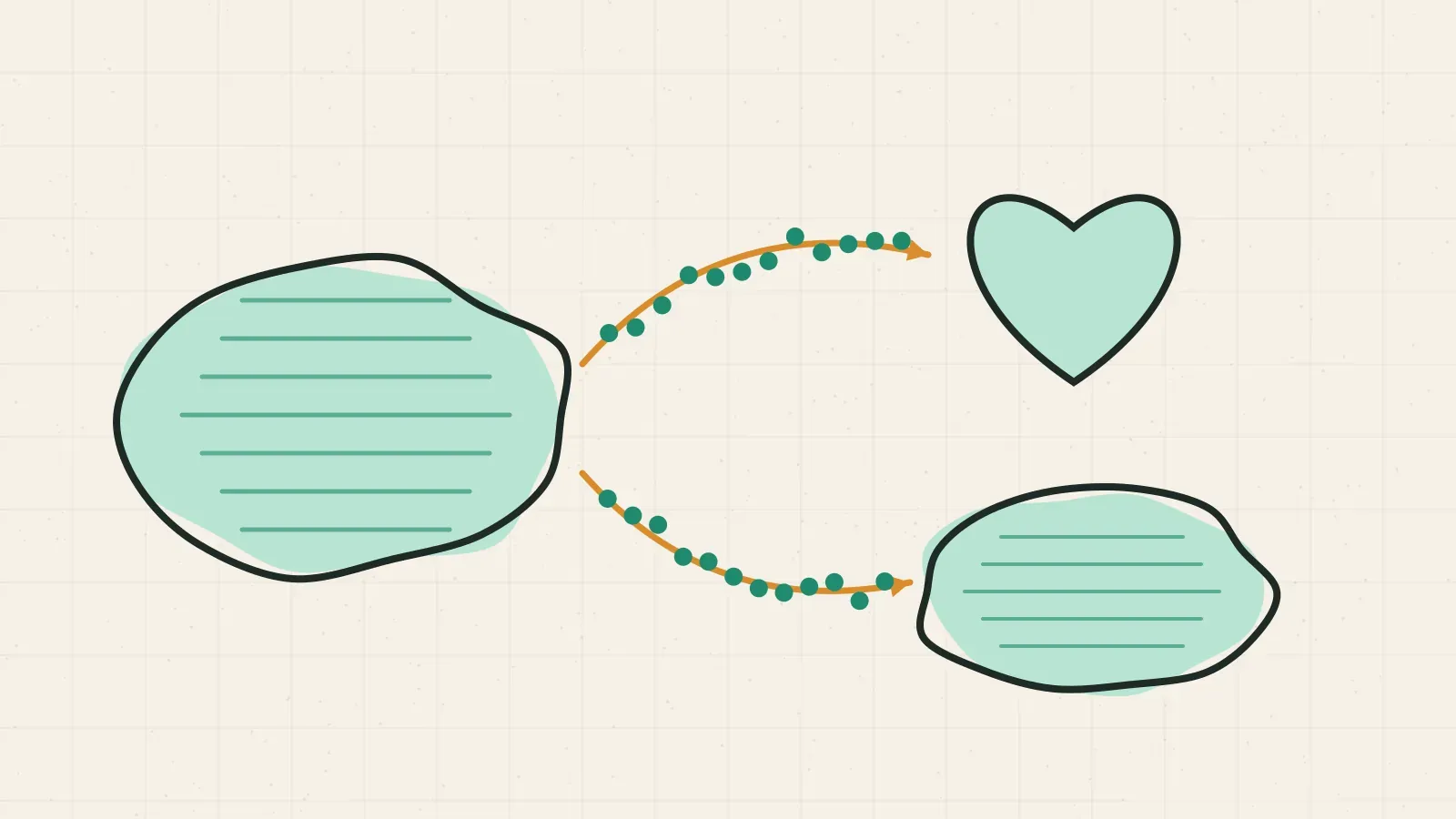
Hard muscle burns. The sensation is real. The caption most people learned for it is not. Lactate is a fuel. Working muscle makes it, ships it, and other tissues take it up and oxidize it. The burn is not lactate acting as a toxin.
The cell is moving carbon and reducing power to places that can use both. It is not filling with a poison it must later flush.
Made while oxygen is still there
Glucose, or glycogen stored in the fiber, is broken down by glycolysis to pyruvate. Pyruvate sits at a fork. It can enter mitochondria and be oxidized. It can also be reduced to lactate by lactate dehydrogenase. That second step regenerates NAD+, the carrier glycolysis must reload if it is to take another turn.
Cells make lactate while oxygen is still present. Fast glycolysis can outrun the immediate appetite of mitochondria for pyruvate, even when oxygen delivery is fine. Lactate rises because the pathway is busy, not because the cell has run out of air.
The equilibrium of lactate dehydrogenase favors lactate over pyruvate. Mitochondria pull pyruvate away by oxidizing it, so the pathway does not stall. When work surges, pyruvate from glycolysis rises faster than mitochondria clear it, and the lactate level rises. When work eases, oxidation and export bring the level down. Production and consumption are both always on. The level is a balance, not a dump.
The shuttle between tissues
Lactate does not have to be used in the cell that made it. Monocarboxylate transporters move it across membranes. Fibers built for fast work tend to export it. Oxidative fibers, the heart, and other organs take it up. This movement is the lactate shuttle. Carbon made in one place becomes fuel in another.
The heart is a ready customer. During hard work, circulating lactate is a convenient fuel for cardiac muscle, which is dense with mitochondria. A neighboring oxidative fiber can oxidize lactate released by a fiber working flat out. The brain can take it up too, once cells convert it back to pyruvate. The body shares the load through the blood, without waiting for the liver to rebuild glucose.
A working thigh releases lactate into capillaries. Blood carries it to the heart, which takes a share, and to other muscle that still has oxidative room. Nothing in that path requires the molecule to be harmful in order to move. Transporters exist because the exchange is useful.
The liver runs a real loop
The liver takes lactate up and can rebuild it into glucose. That loop is the Cori cycle. Muscle glycolysis turns glucose into lactate and gains a small yield of ATP. Blood carries the lactate to the liver. Gluconeogenesis spends a larger ATP cost to make glucose again. The new glucose can return to muscle, or to any other tissue that needs it.
The cycle is real, and it is not free. The liver pays an energy price the muscle did not pay. Muscle keeps contracting. The liver spends ATP, much of it supported by fat oxidation, to restock glucose. During a long effort, the liver is part of endurance, not a bystander.
During the work itself, heart and muscle oxidize a large share of lactate rather than sending all of it back through glucose. The Cori cycle runs. It is not the whole shuttle. Oxidation removes lactate by using it. Gluconeogenesis removes lactate by recycling it. Both are consumption. Neither is disposal of a toxin.
A redox carrier as much as a carbon carrier
Lactate also moves reducing power. Converting pyruvate to lactate stores electrons in the lactate molecule. When another tissue converts lactate back to pyruvate, those electrons return to NAD+. The receiving cell gets carbon and a reduced carrier. A rising blood level means production has outpaced consumption for the moment. It does not mean consumption has stopped.
Think of lactate as a parcel. One tissue packs carbon and electrons into it when glycolysis is running hot. Another tissue opens the parcel, recovers pyruvate, and feeds that pyruvate to mitochondria. The parcel was never rubbish. It was how two cells split one job.
The burn is a different pile of molecules
The burn in hard muscle tracks effort. Lactate also tracks effort. The two rise together, and the old lesson treated the pairing as cause. Lactate itself is not a toxin that produces the burn. The sensation lines up more closely with hydrogen ions, and with other metabolites of hard work, than with lactate cast as a poison.
When ATP is split quickly, the reactions that follow release protons. Inorganic phosphate rises as phosphocreatine and ATP are drawn down. Potassium shifts. Sensory nerves in muscle respond to that chemical crowd. The feeling is information about workload, not evidence that lactate has turned corrosive.
Lactate and acidity often travel together in the story people tell, because an old name fused them. The biochemistry does not. Lactate dehydrogenase produces lactate. Acidification has several sources, most of them tied to ATP turnover. Pairing is not identity.
Lactate is taken up and oxidized on a short clock after the effort ends. The ache that arrives a day later tracks damage, inflammation, and repair, not the fuel that has already been used.
Pyruvate is what the mitochondrion takes
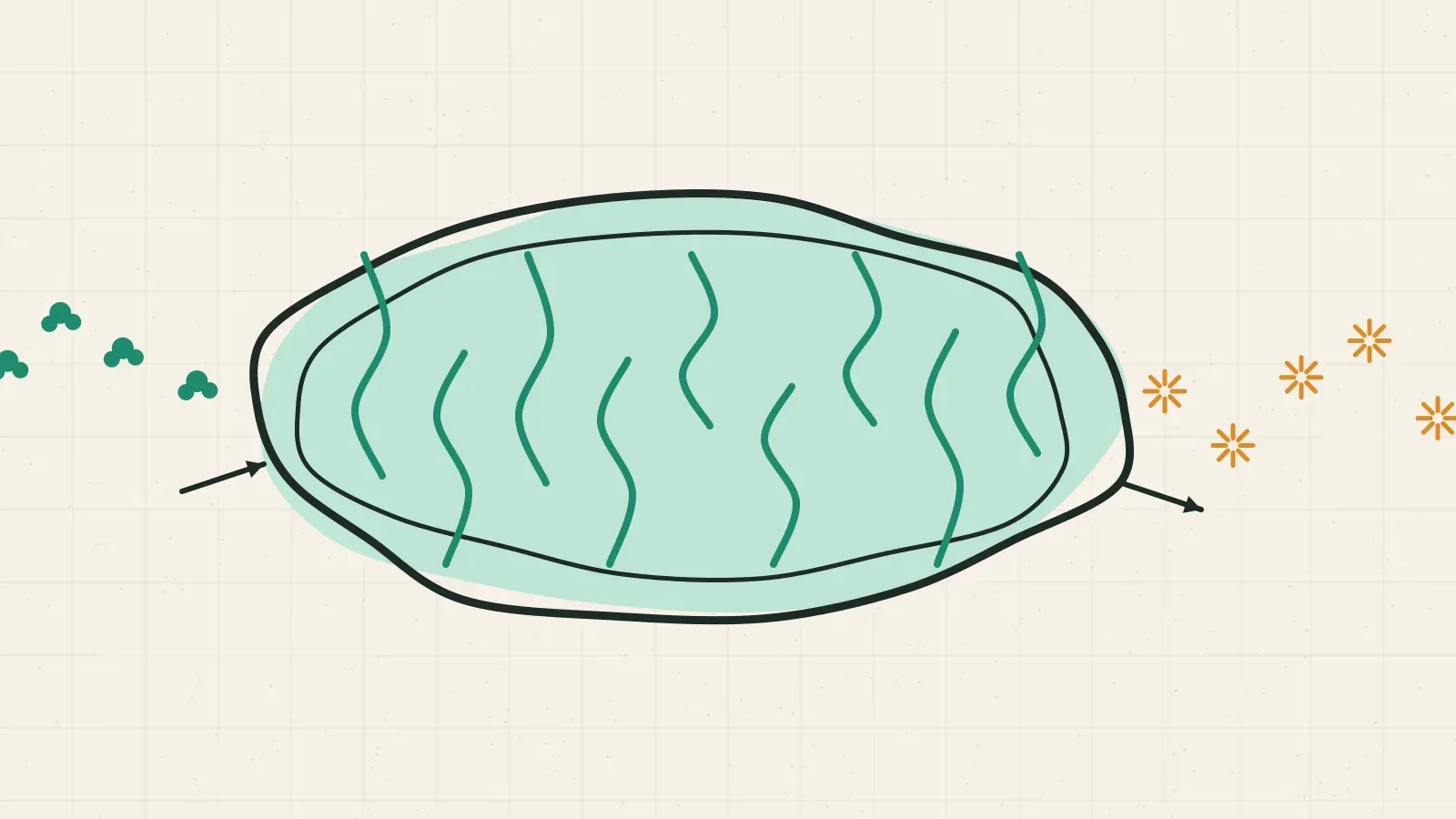
A transporter brings lactate into a cell, or it is already inside the cell that made it. Lactate dehydrogenase converts it back to pyruvate. Pyruvate crosses into the mitochondrion on its own carrier. There, pyruvate dehydrogenase produces acetyl-CoA, which enters the citric acid cycle. Electrons feed the chain in the inner membrane. Oxygen accepts them at the end. ATP synthase uses the proton gradient to make ATP.
That is oxidation of lactate-derived pyruvate. The mitochondrion does not treat lactate as waste. The cytosol does the conversion. The organelle runs the carbon toward carbon dioxide and water, with ATP as the yield.
When work is hard, this route runs beside ongoing glycolysis. Glycolysis makes ATP quickly and makes lactate. Mitochondria make more ATP per carbon from pyruvate that lactate can become again. Mitochondria in a neighboring cell can finish work that a glycolytic fiber started.
Clearance is continued use
After the effort, blood lactate falls because consumption continues and production slows. Heart muscle, oxidative fibers, and the liver keep using it. The kidneys take a share as well. Each of those tissues is feeding, not draining a poison.
More mitochondria, and more transporters, mean a given workload produces a smaller rise, because consumption keeps up better. The fuel is the same. The capacity to oxidize it is larger. That is supply and demand, not resistance to a toxin.
Movement after hard work helps because it keeps blood flowing and keeps oxidative muscle employed. What people call a flush is use. Slow the use, and the level falls more slowly. The direction is toward oxidation and recycling, not toward exile.
A carrier, not a waste product
Lactate is also a signal. Cells sense it, and that signal can change how tissues handle fuel. A molecule the body bothers to detect, transport, oxidize, and rebuild into glucose is doing a job. Jobs are not what toxins get.
Hydrogen ions, phosphate, heat, and the strain of repeated contraction are real. They limit how long a given pace can be held. Lactate is the companion of that limit more often than its cause. Respect the burn as a report on workload. Do not blame the carrier that let glycolysis keep pace with the ask.
Working muscle ships lactate as a fuel. Other muscle and the heart oxidize it. The liver can rebuild glucose from it, at an ATP cost, through the Cori cycle. Mitochondria oxidize the pyruvate that lactate becomes. The blood level is a balance. Raise the work, and production leads for a while. Ease the work, and use catches up.
This column is not medical advice. Unusual pain, chest pressure, or a collapse during effort is a reason to stop and get clinical help. For the ordinary burn of a hard interval, lactate was on the move as food. The thing that burned was the cost of going that fast.