A late meal and the next morning's insulin

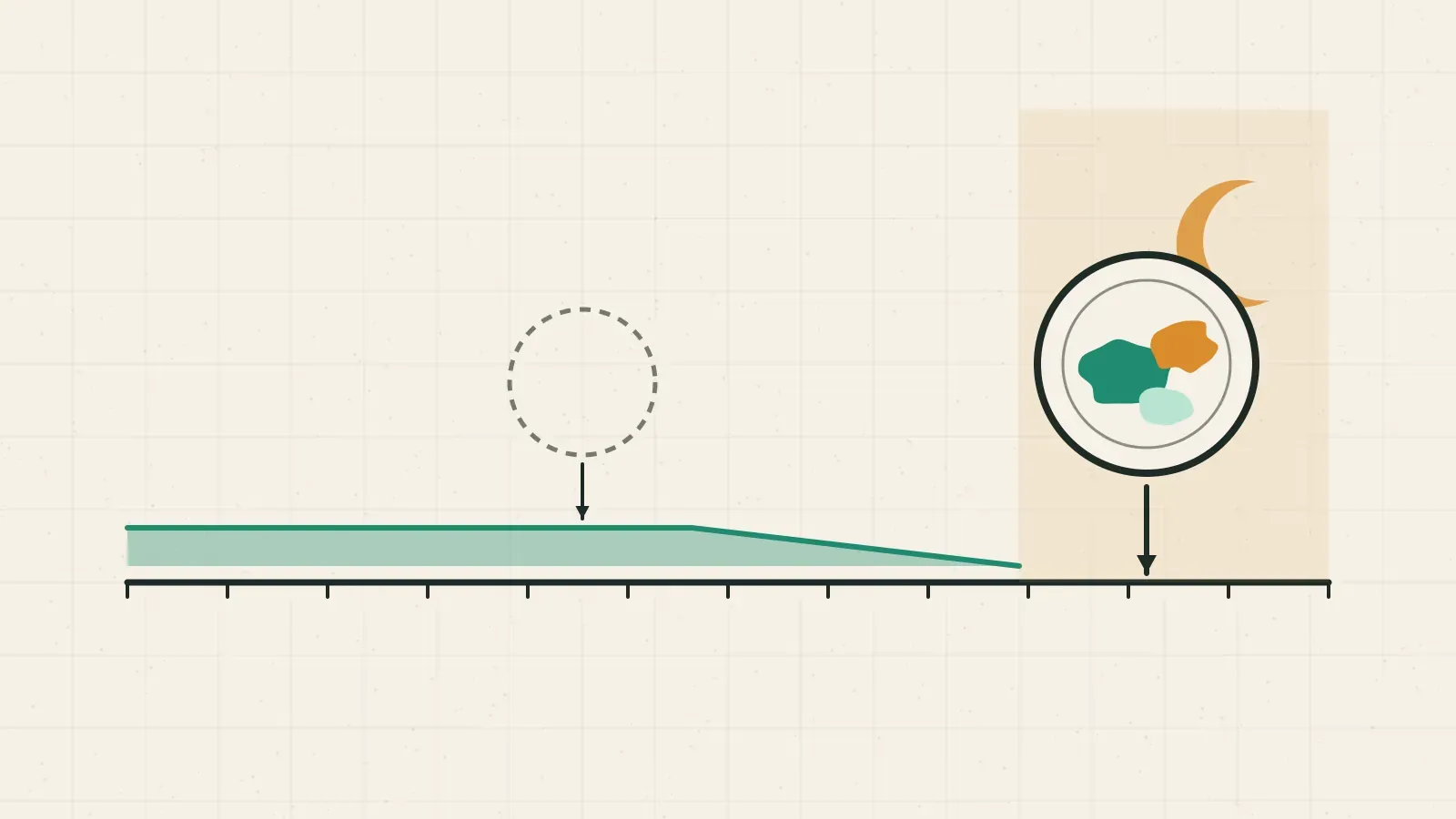
The meal meets a night setting
Insulin sensitivity is not flat across the day. In people awake by day and asleep at night, sensitivity is generally higher in the morning and through the active day. It is generally lower in the evening and at night. The same meal is not the same metabolic event at noon and near the end of the waking day.
A late meal lands in the lower phase. The pancreas is less ready. Muscle is less interested in glucose. The liver is less willing to stand down. Digestion still works. Absorption still works. Clearance is less efficient. Some of that meal is still being processed when morning cortisol arrives. The next morning’s insulin can show the overlap.
This is not a rule that food after a certain hour is forbidden. There is no single clock time that turns insulin off. The point is the hormonal setting the meal lands in.
Why sensitivity falls after dark
Cells keep time. A master clock in the brain tracks light and sets the day. Liver, muscle, fat, and pancreas keep local clocks of their own. Those clocks are loops of genes and proteins. They turn enzyme programs on and off across the day and night. Insulin action is one of the programs they time.
In the biological day, muscle is primed to store glucose and the liver is primed to suppress its own output when insulin arrives. At night those settings ease off. The body expects sleep, not a large delivery of starch and fat.
The pancreas has a clock too. Beta cells do not answer glucose with the same force at every hour. The insulin secretory response is stronger in the biological morning than in the biological evening, even when the glucose stimulus is matched. A late meal asks for insulin when the beta cell’s reply is softer.
Melatonin is part of that softness. As darkness falls, the pineal gland releases it as a darkness signal. Beta cells carry melatonin receptors. When melatonin binds them, insulin secretion is restrained. A large plate at that hour asks the pancreas to work against one of its own night signals.
Cortisol runs the other way. It is low in the early night and rising toward dawn. A meal in the low-cortisol hour is not automatically easy. Low cortisol removes one restraint, but melatonin and the tissue clocks are already in night mode. Hours later, cortisol climbs and meets whatever the meal left behind.
Fat, protein, and the length of the curve
Carbohydrate raises glucose fastest. Fat slows gastric emptying, so the peak may be lower and the tail longer. Protein stimulates insulin and supplies amino acids the liver can later turn into glucose. A late mixed meal is not a brief spike. It is a multi-hour input. Finishing the plate is not the same as clearing the meal.
Fats from that meal enter the blood over hours and make muscle less eager to take up glucose. The late meal can worsen the next morning twice: leftover substrate, and a lipid background that opposes insulin.
Landing after the window has narrowed
The evening insulin window is a narrowing, not a slammed door. Early evening may still be close to daytime sensitivity, depending on the person and on how well sleep aligns with the clock. Later, as melatonin rises and local clocks enter night programs, the window is narrower. A meal placed there needs more insulin for the same clearance, or it accepts higher glucose for longer.
Late means late in the internal day, not a digit on the wall. A night worker’s biological evening may fall in the afternoon. Advice that pretends every body shuts at the same hour is a slogan.
Glucose enters a system that was preparing to fast. Insulin has to be recruited against that preparation, so part of the curve is still a curve at dawn.
What morning insulin is responding to
By dawn a late meal can still be unfinished business. A mixed meal empties from the stomach over hours, and absorption continues after the last bite. Insulin from that meal may still be up, or it may have fallen while glucose and fats have not settled.
A meal close to sleep shortens the gap a fasting sample assumes. The morning tube may be a late post-meal sample in disguise. High glucose with high insulin means the tissues were clearing fuel inefficiently, not that the pancreas forgot its job.
Dawn hormones arrive on their own schedule. Cortisol rises. Growth hormone pulses have done their night work and left an insulin-resistant trace. Catecholamines pick up as waking nears. These signals tell the liver to produce glucose. If the late meal topped up glycogen and left amino acids and glycerol available, the liver has both the order and the raw material.
Morning insulin then has two clients: residual fuel from dinner, and new glucose from the dawn push. If sensitivity is still low, the beta cell has to answer harder. Higher morning insulin with unsettled glucose is that extra work. It is one morning, not a diagnosis.
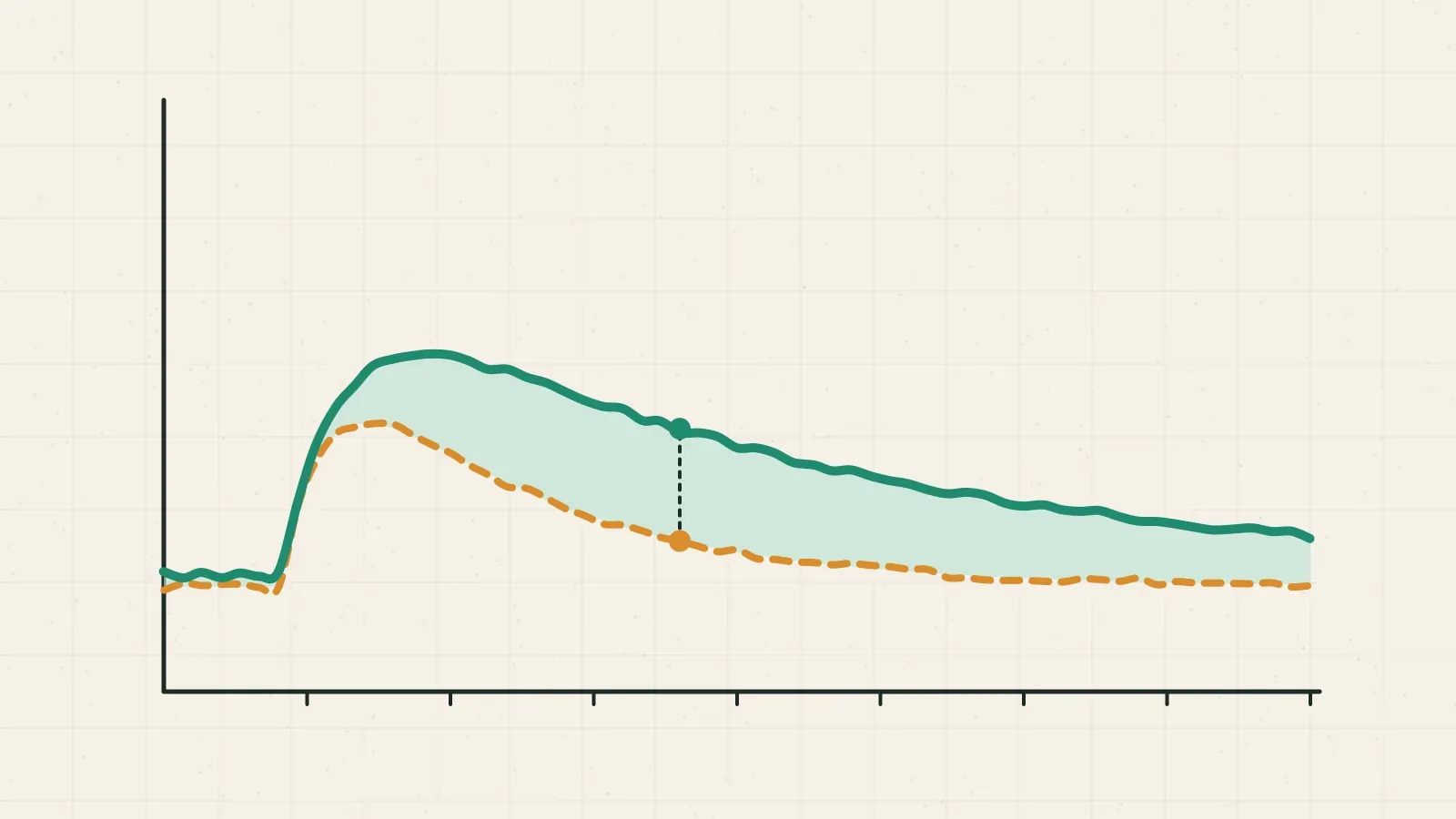
The late dinner raises the platform the morning has to descend from. Insulin is still working on yesterday while cortisol is already issuing new orders.
Cortisol meets what is still being cleared
Cortisol’s morning rise is normal. It becomes more consequential when the blood is not empty of the last meal. Cortisol supports glucose release, reduces muscle insulin sensitivity, and frees a trickle of fatty acids. Useful in a true fast. Less helpful when dinner is still on board.
The overlap has a simple order. Glucose is still arriving from the gut, or has only just stopped. The liver, under cortisol, adds more. Muscle takes less. Insulin rises to compensate, and clearance stretches into the morning. Breakfast then starts from a higher platform. The late dinner and the ordinary breakfast become one long evening that ran into the day.
An earlier dinner gives the night more time. Cortisol still rises, and the dawn rise still exists. The difference is the company those hormones keep. After an earlier meal they meet a liver that has spent more of the night in a real fast, not a liver still clearing a late plate.
No hour on the clock makes this switch flip. A meal early enough that the gut is quiet before sleep leaves a different remainder than a meal eaten as the lights go out. Size matters as much as timing. A small bite is not a heavy mixed plate. The biology is continuous. It is not a cliff, and it is not a curfew.
Not a ban, and not a moral
Never eat after 6 is a slogan, not a mechanism. That hour ignores shift work, season, and whether a person sleeps at night. It ignores meal size. An early large meal and a late small one are not moral opposites. The body is not grading punctuality. It is running clocks in the pancreas, the liver, and the muscle.
The fair statement is narrower. Circadian insulin sensitivity is generally lower at night. A meal that lands in that phase is cleared less readily. If it is large and close to sleep, the next morning can still show it, in glucose, in insulin, and often in triglycerides. If the meal sits earlier in the biological evening, or if it is smaller, the overlap with dawn cortisol shrinks.
A late meal changes the input an insulin dose was guessed against. That is a reason for a personal plan, not a reason to invent a cutoff and pretend a trial found it. A rigid hour can also wreck sleep, and sleep loss raises morning cortisol on its own. Fake precision bought at that price misses the point.
What the next morning is showing
The next morning is a readout, not a verdict. Glucose that stays up longer, or insulin that looks busy before the first bite, can mean the late meal and the dawn rise overlapped. It can also mean short sleep, illness, or a very large meal of any timing. One morning cannot separate those causes. A pattern can.
If the late meal was the clear change, the comparison is ordinary. Move that meal earlier in the biological day. Keep sleep as steady as life allows. See whether the morning curve eases. The mechanism predicts the direction. Nothing here depends on a borrowed percentage.
This is not medical advice. The plate landed when the insulin window was narrow. Morning cortisol did not wait for that window to reopen.