How a short night changes the next morning's glucose

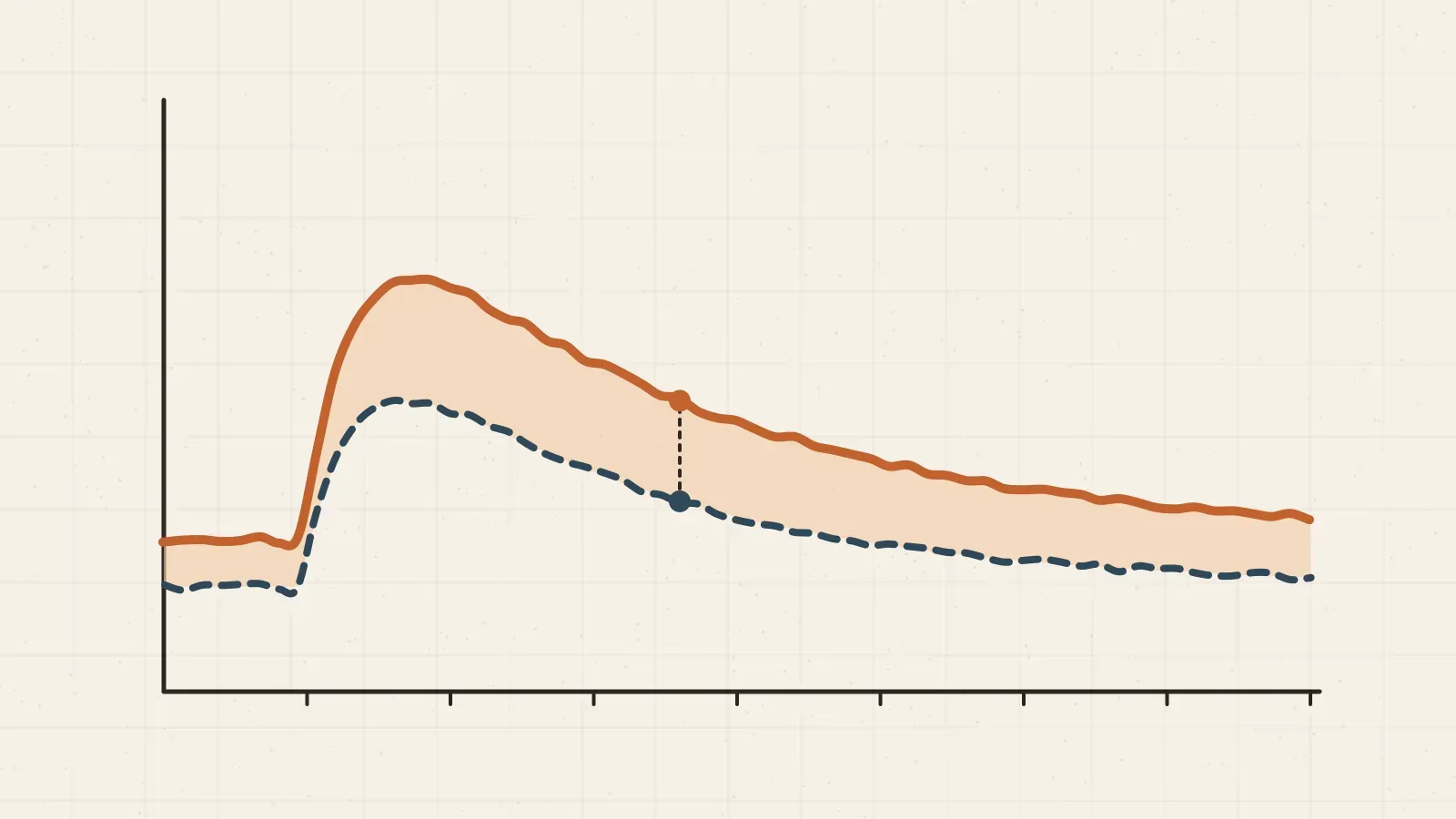
The breakfast did not change
A short night leaves a mark that shows up at the table. The toast is the same. The coffee is the same. The glucose curve is not.
What changes is the hormonal setting. Cortisol runs higher into the morning. The sympathetic nerves are less quiet. The liver is more willing to release glucose. Muscle is less eager to take that glucose up. Insulin still works. It just has a harder job.
What cortisol is doing before waking
Cortisol comes from the adrenal cortex. It is a glucocorticoid, a steroid built from cholesterol. Release is a chain, not a local whim. The hypothalamus sends corticotropin-releasing hormone. The pituitary answers with adrenocorticotropic hormone. The adrenal cortex then secretes cortisol. That chain is the HPA axis, the main schedule for this hormone.
On an ordinary day cortisol has a shape. It is low in the first part of the night. It rises in the hours before dawn. It is high around waking. It falls through the afternoon. Light, the body clock, and sleep help hold that curve in place.
A short night leans on that rise. Sleep loss is a physiological stress even when the day ahead looks ordinary. The HPA axis treats the missing sleep as a reason to keep the cortisol signal stronger. The morning peak can arrive higher, broader, or both. More cortisol is present while breakfast is being arranged.
The sympathetic nervous system joins in. Short sleep does not leave the autonomic nerves in the calm tilt of deep rest. Norepinephrine from nerve endings, and epinephrine from the adrenal medulla, sit higher. Those catecholamines are fast signals. They tell the liver to break down glycogen. They raise fatty acids from fat tissue. A quiet kitchen can still carry that chemistry.
The surge after waking
Cortisol bumps again in the minutes after waking. That awakening surge sits on the pre-dawn rise. After a short night it is the last step of a rhythm already pushed. The issue is the size of the push, not the fact of a morning hormone.
A curve that sits higher
Glucose tolerance is a plain idea. Give the body a carbohydrate load. Watch how high glucose goes, and how long it takes to come back down. Insulin clears that load into muscle and fat, and tells the liver to stop adding more.
After a short night the same load is harder to clear. Glucose tends to peak higher and stay up longer. Insulin often rises too, because the pancreas can sense the glucose. The extra insulin may still not restore the rested curve. The tissues are less willing to listen. That is worsened glucose tolerance. It is a morning condition, not a new identity.
The dawn rise is a real event
The dawn phenomenon is an early-morning rise in blood glucose. It starts before breakfast. It is not an illusion of the first bite. A smaller version occurs when insulin secretion is healthy. Insulin answers, and the rise stays in a narrow band. When insulin is scarce or less effective, the same hormonal dawn pushes glucose further.
The drivers are morning hormones. Cortisol is one. Growth hormone is another. Growth hormone is released in pulses, many of them tied to deep sleep, and it opposes insulin. Catecholamines add a third push. Together they raise glucose production and reduce glucose uptake before and around waking.
A rise at dawn can happen with no overnight low at all. The clock and the hormones are enough. A short night does not invent the dawn phenomenon. It can amplify the hormones that drive it, so breakfast lands on a rise already underway.
Where the glucose comes from
Before breakfast the liver is the supplier. After the first bites, gut and liver are both in the game. Insulin has to turn the liver down and turn muscle uptake up.
The liver is given permission
Cortisol gives the liver permission to make glucose and to release it. Inside the liver cell it changes which genes are read. It supports the enzymes of gluconeogenesis, the building of new glucose from leftovers. Lactate from muscle, glycerol from fat breakdown, and certain amino acids can be assembled into glucose. Cortisol also supports glucose-6-phosphatase, the enzyme that lets finished glucose leave the cell into the blood. Without that exit, glucose made in the liver would stay trapped.
Catecholamines move faster than that gene program. They speed the breakdown of remaining glycogen through receptors on the liver cell. Cortisol rewires the factory. The sympathetic signal opens the tap. The two stack.
A short night does not pour sugar in from nowhere. It softens insulin’s brake on liver output, so the liver keeps contributing after the first bite.
Muscle is less eager
Most of a meal’s glucose is supposed to disappear into skeletal muscle. Muscle is the large sink. Insulin moves GLUT4 transporters to the muscle cell surface. Glucose crosses in, and is burned or stored as glycogen.
Cortisol makes that sink shallower. Over hours it reduces insulin sensitivity. The receptor and the steps below it respond less briskly. The same insulin concentration moves less glucose. Fat tissue, a smaller sink, listens less well too. The circulation keeps what the tissues decline.
The sympathetic signal adds a faster reluctance. Catecholamines break down fat. Fatty acids enter the blood. Muscle offered abundant fatty acids is less interested in glucose. Cells do not run two fuel programs at full tilt. Glucose stays in the circulation longer. That is substrate competition, set in motion before the meal.
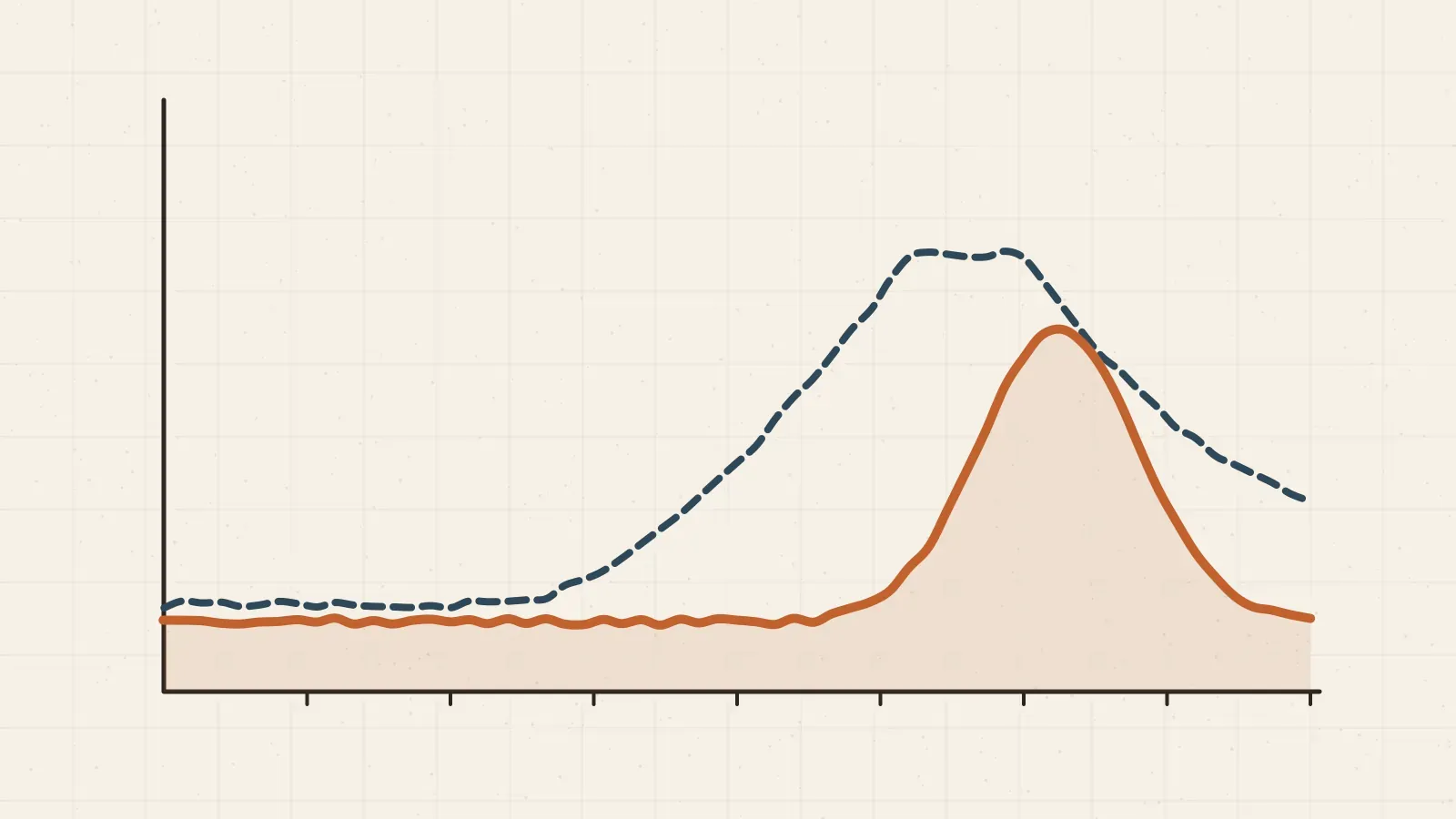
Cortisol is already climbing before the plate arrives. Insulin is opposing a hormone with a head start. The slow return, not only the peak, is the short-night signature.
Less deep sleep is not a late bedtime
Sleep is architecture, not a single switch. A night cycles through light non-REM sleep, deep slow-wave sleep, and REM. Deep sleep clusters early. REM takes a larger share later.
Losing deep sleep is not the same event as going to bed late. A person can shift bedtime and still pass through ordinary stages, if the night is long and unbroken. The stages are intact. Only the clock time moved. Lose the first hours, or sleep in fragments, and slow-wave sleep itself can go missing. Bedtime looks ordinary. The architecture does not.
Deep sleep is tied to growth hormone pulses and to a parasympathetic tilt. Cut it, and growth hormone’s opposition to insulin is rearranged, not erased. Autonomic balance leans sympathetic. The night is less of a metabolic rest. Stage loss rewrites the hormonal night, and that is enough to change breakfast.
A late bedtime with a full night is a circadian slide, not a stage injury. Cortisol’s rise follows the body clock and light, not only hours asleep. If sleep shifts later but breakfast stays on the old clock, a person may eat while the biological night is unfinished. Insulin sensitivity may still be in its lower phase. Deep sleep can be plentiful, and the morning curve can still worsen.
Less deep sleep is a stage injury. A late bedtime is a clock injury. They are not synonyms. A short night often mixes both, which is why ordinary speech blurs them.
The same meal under a different setting
The next breakfast is the same meal under a different hormonal setting.
The oats did not become a different food. The liver became a more generous supplier. Muscle became a more reluctant sink. Insulin has to speak louder, or accept a slower cleanup. Dawn hormones and the meal overlap. The fork cannot explain the gap. The night can.
One night is not a disease
One bad night does not cause diabetes. Diabetes is a long mismatch. Insulin secretion fails to keep up, insulin action stays impaired, and glucose regulation drifts over months and years. A rough morning is not that history.
Repeated short sleep is a different conversation. A pattern of higher cortisol tone is not what one breakfast proves. A single elevated morning is not a diagnosis. A long run of them is not nothing. They should not be collapsed into each other.
This is not medical advice. People who use insulin or other glucose-lowering treatment should read a rough morning with their own clinician. Sleep changed the hormones. The hormones changed the work of breakfast. The plate was the same. The setting was not.